
Destinations
Places worth returning to.
Liora begins with places that offer something distinct — a way of living, a season, a landscape or a cultural rhythm that makes you want to come back.
Some of these destinations have been part of our own lives for years. Others are being explored more deliberately as the first collections take shape. In every case, we look beyond the obvious appeal of a place to understand how it is actually lived: throughout the year, beyond the postcard, and from the perspective of having a home there rather than simply visiting.
The destinations below show where future collections may take shape. Within each, we look for homes that feel rooted in their setting and strong enough to earn their place alongside the others.
The house always comes before the map.
France
Paris
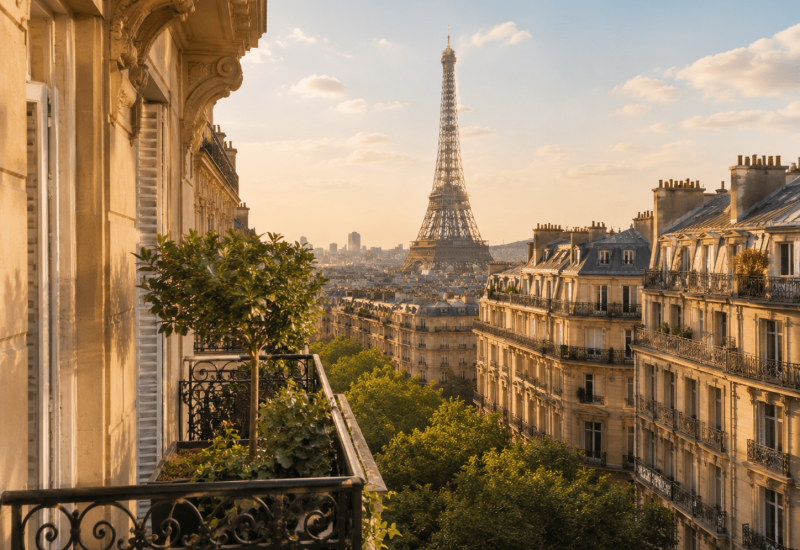
Art, architecture, music, literature, fashion and food are not separate attractions here; they form part of a cultural life that keeps renewing itself. An exhibition leads to another, a building changes the way you notice a street, a neighbourhood reveals a different layer of the city than the one beside it.
That depth is what makes Paris particularly compelling as a place to own rather than simply visit. There is no need to reduce the city to highlights or occasions. You can follow its cultural life over time, return to what interests you, and allow your relationship with Paris to become more informed with every stay.
Discover our view ↓
Where Liora Looks
For us, the right Paris neighbourhood is one that still works when there is nothing particular on the agenda.
We look for established residential areas where much of daily life can happen on foot — good food shops, cafés, gardens and culture nearby — but where turning into your own street already feels like leaving some of the intensity of Paris behind.
A prestigious postcode alone is not enough. We would rather find the right apartment on a street people genuinely live in than choose an address simply because everyone recognises its name.
Why it belongs
Few cities offer the same cultural depth as Paris. There is always another exhibition, performance, gallery, building, bookshop or restaurant worth discovering — and having a home here means there is no need to fit everything into a few days.
That changes the relationship with the city. You can cross Paris for one painting, spend the rest of the afternoon doing very little, and leave the next museum until another time.
Within a collection, Paris brings that possibility of living with culture rather than travelling for it.
What we look for
Parisian apartments can be extraordinarily seductive, but we are not interested in period details simply for their own sake.
What matters is how the apartment actually feels to live in: the quality of the light, proportions that make sense, a kitchen you want to use, rooms with enough calm, and an architecture that still gives the home an identity of its own.
Old parquet, tall windows, mouldings or a fireplace may be part of that. So might a glimpse over rooftops or a small balcony that becomes unexpectedly important on a sunny morning.
And we would always choose a home with soul and a good daily rhythm over one that photographs perfectly but feels anonymous once the front door closes.
When it comes into its own
Paris does not really have an off-season, and that is part of its value.
There are autumn weeks when exhibitions begin again and the city seems to turn inward; winter evenings when restaurants and theatres matter more than the weather outside; the first tables returning to pavements in spring; and June evenings when daylight lingers far beyond dinner.
Having your own place means being able to know all of those versions of Paris rather than choosing the supposedly perfect moment to visit.
Our perspective
The relationship with Paris changes when there is no need to experience everything each time you arrive.
Perhaps the greatest luxury of having a home in Paris is not having to make the most of Paris.
You begin to repeat yourself. The same baker. The same walk. A newspaper at the same café. You know which room of a museum you want to see and leave after twenty minutes. Friends start knowing where to find you.
Little by little, the city stops being something outside your front door that needs to be explored.
A small part of it simply becomes familiar.
Cannes
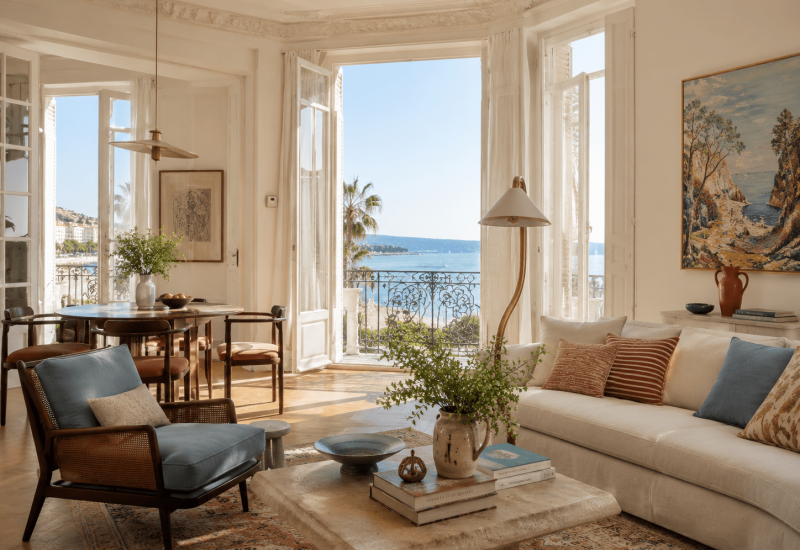
Cannes occupies a rather unusual position on the Côte d’Azur.
It is compact enough to function as a city in its own right, yet it sits at the meeting point of very different landscapes and ways of living. The Mediterranean is immediately present, while behind the coast the terrain rises quickly towards gardens, old villages, artists’ towns and the hills of the hinterland.
For us, that geography is more interesting than Cannes as a glamorous address. A home here can belong to the city while opening onto a much larger territory — from the coast towards Grasse, Mougins, Saint-Paul-de-Vence and beyond.
Discover our view ↓
Where Liora Looks
For us, Cannes is not defined by the Croisette.
We are more interested in the places where the city begins to feel residential: streets you can walk every morning, a market that becomes familiar, somewhere to have lunch without thinking about it — while the sea remains close enough to shape the light and the rhythm of the day.
A spectacular view can be seductive. But we would choose the better home, the better street and the better daily life over a postcard view alone.
Why it belongs
Cannes occupies an unusual position.
You can live without much planning — walk to the market, meet someone for dinner, go down to the sea — and yet within a short drive the atmosphere changes completely. Mougins, Grasse, Saint-Paul-de-Vence, the hills and old villages behind the coast open up another South of France.
That matters to us. A home here is not only a home in Cannes; it can become a doorway into an entire region.
What we look for
We look first for the qualities that are difficult to add later: beautiful proportions, natural light, architectural character and a sense of calm.
Outdoor space matters more here than in many cities, but it does not have to be grand. A terrace where breakfast actually happens can be more valuable than an oversized balcony designed mainly to impress.
And we are wary of apartments that could be anywhere on the Mediterranean. The right home should still have something of Cannes in it when the shutters are closed.
When it comes into its own
Cannes becomes particularly appealing once the height of summer has passed. By October, the sea is still part of daily life, but the rhythm has changed. The streets are quieter, the places that belong to everyday Cannes become more visible, and the clear Mediterranean light can be extraordinary.
It is also a wonderful time to look beyond the coast. Within a short drive, the landscape begins to rise towards old villages, gardens and the hills of the hinterland — a reminder that having a home in Cannes gives access to much more than the city itself.
Our perspective
Cannes is interesting to us because it can be lived as a real home, not only as a place by the sea.
It has the compactness of a small city — somewhere you can build routines, know your streets and live much of the day without planning — while the wider Côte d’Azur and its hinterland remain part of the same everyday territory.
That gives a home here an unusual range. Cannes itself can become familiar, while the landscape and towns behind the coast continue to open up around it over time.
For Liora, that combination matters more than the postcard.
French Alps
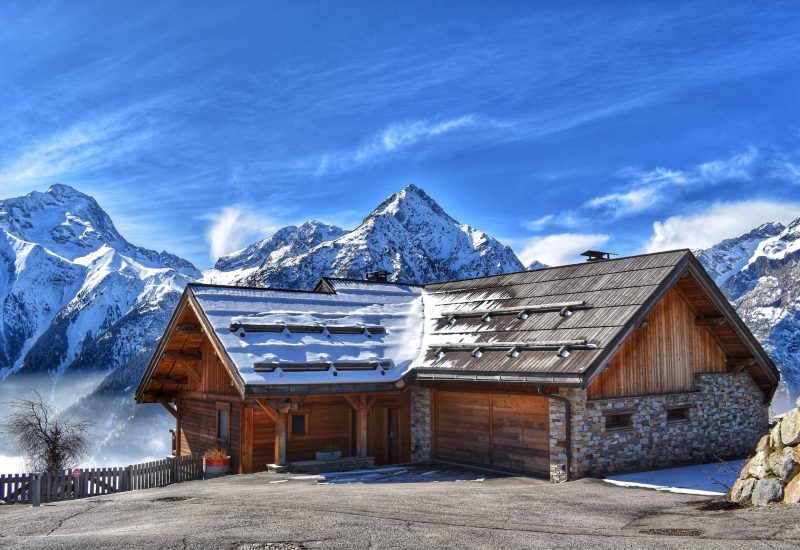
The French Alps are not one season repeated every year.
Winter may be their most dramatic expression, but the landscape changes completely once the snow retreats: paths reopen, meadows replace pistes, villages move outdoors and the mountains become something to walk through rather than look at from behind glass.
That transformation is what makes the region interesting to us as a place for a home. We are not looking for a winter address, but for somewhere that makes sense in January, June and October — with enough life around it to remain a real place when the ski lifts stop defining the day.
Discover our view ↓
Where Liora Looks
Our search is likely to concentrate around Chamonix, Megève and Saint-Gervais-les-Bains, but for quite different reasons.
Chamonix has the raw presence of the high mountains and a culture shaped by people who actually use them. Megève offers a more composed village environment, with strong architecture and a long-established life beyond skiing. Saint-Gervais interests us for something quieter: a genuine town, thermal history and a relationship with the Mont Blanc landscape that feels less dependent on spectacle.
We are less interested in simply being closest to a lift than in finding the place where the house, the village and the landscape still work together once winter is over.
Why it belongs
Few places change the rhythm of life as decisively as the mountains.
A home in the Alps introduces something that a city or Mediterranean house cannot: weather that genuinely matters, seasons that alter how rooms are used, and a landscape that can make staying close to home feel as valuable as going anywhere.
That contrast gives the Alps an important place within a collection. Not because every collection “needs a ski house”, but because mountain life brings an entirely different relationship with time, nature and the home itself.
What we look for
We are wary of chalets designed primarily to perform as luxury ski properties.
Too much glass, oversized volumes, basement spas and interiors built around a generic idea of Alpine luxury can quickly detach a house from the place that made it interesting in the first place.
We would rather find good proportions, real timber and stone where they belong, views that are part of daily life rather than theatrical features, and spaces that feel as natural after a summer walk as they do beside a fire in February.
Outside matters too. A terrace that catches summer sun, a garden or meadow, and a strong relationship with the surrounding landscape can be just as important as proximity to the slopes.
When it comes into its own
Winter will always have its particular intensity here. But we are equally interested in what happens after it.
Late spring brings the valleys back to life. Summer opens an entirely different territory of walking, cycling and long days outdoors. Early autumn can be quieter still, when the crowds have thinned and the mountains begin to change colour before the first snow arrives.
For us, the strongest Alpine home is one that does not feel as though it is waiting for December.
Our perspective
The Alps make you pay attention to things that rarely appear in a property brochure.
Which side of the valley keeps the light longest. Whether a terrace is still somewhere you want to sit in October. How a village feels on an ordinary Tuesday outside the ski season. Whether getting to the house remains easy when the snow comes, and whether you can leave the car behind once you are there.
We also look differently at the view. A spectacular mountain panorama is wonderful, but not if the house is dark for much of the day, disconnected from the village or designed almost entirely around winter.
That is part of what draws us to places such as Chamonix, Megève and Saint-Gervais-les-Bains. They each offer a different relationship with the mountains, but all have the potential to be lived beyond the ski season.
For us, the real test is simple: would we still want to be here when there is no snow, no blue-sky forecast and nothing particular planned for the day?
If the answer is yes, we may have found a mountain home rather than a ski property.
South of France
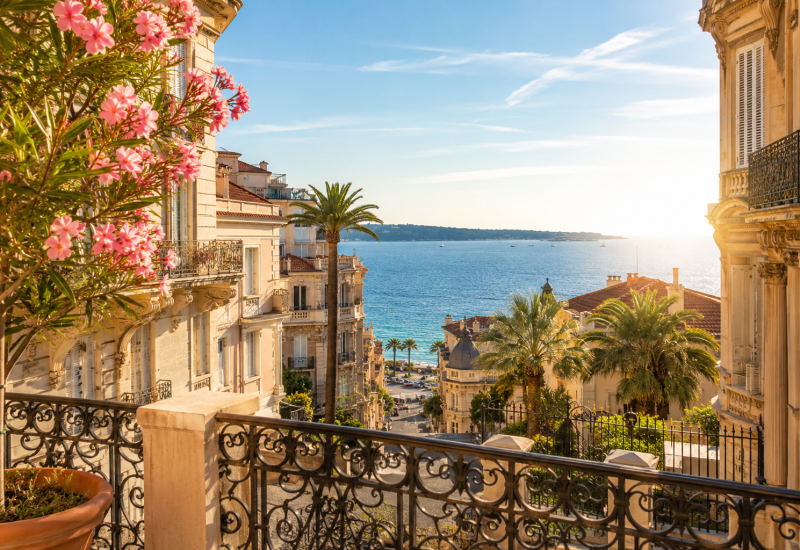
The South of France becomes more interesting the moment you move beyond the obvious addresses.
The Mediterranean coast is only one part of the story. Behind it, the land rises quickly towards old villages, terraces, gardens and houses that have often grown with their landscape over generations.
That is the South of France that interests us most: not necessarily remote, and never isolated for the sake of it, but places where the house, the garden and the wider landscape still feel inseparable.
Discover our view ↓
Where Liora Looks
Our search extends from the Côte d’Azur into the villages and countryside behind it.
We are particularly drawn to places where the coast remains within reach but no longer dictates the character of the home — old hill towns, quieter valleys and landscapes where stone walls, mature planting and long views have more presence than resort infrastructure.
The exact address matters less than the balance: enough life nearby to make the house easy to use throughout the year, but enough distance from the busiest parts of the Riviera for the place to retain its own rhythm.
Why it belongs
The South of France offers a kind of continuity that is difficult to manufacture.
Architecture, gardens, climate and landscape often belong to the same story. A stone house can open naturally onto terraces that have been there for decades; an old garden can shape how the rooms are used; shutters, shade and orientation can matter as much as the size of the house itself.
It also brings a long season to a collection. Spring begins early, autumn stretches well beyond summer, and life can move naturally between inside and outside for much of the year.
For us, its value lies less in the idea of “the South of France” than in finding one particular place within it that feels complete.
What we look for
We are not looking for perfection.
A house can need substantial work and still be compelling if the essentials are right: good proportions, architectural integrity, a strong relationship with the land and enough original character to guide what comes next.
We pay close attention to things that cannot easily be added later — orientation, the way light moves through the house, the approach, mature trees, old walls, views, privacy and how naturally the building sits on its site.
A neglected garden can be brought back. An awkward terrace can often be repaired. Interiors can be rethought.
A house that never quite belongs to its landscape is much harder to fix.
When it comes into its own
Summer is only one version of the region.
Spring arrives early and is celebrated almost as visibly as summer itself — gardens reopen, flowers return to the landscape and towns and villages mark the season with festivals and local traditions of their own.
Autumn has another rhythm. September and October bring softer light, harvests, markets and cultural events, while much of village life continues long after the summer crowds have gone.
Those months matter to us because they reveal something essential: the South of France is not a place that closes when August ends. It has a calendar, a community and a life of its own.
The strongest home here should make you want to know all of those seasons, not simply wait for July.
Our perspective
The South of France is a region where photographs can be particularly deceptive.
A beautiful stone façade tells you very little about how the house will actually live. You need to understand where the sun disappears in the afternoon, whether the garden feels connected to the rooms or simply surrounds them, how exposed a terrace becomes in summer, what you hear when you stand outside, and whether the approach to the house creates anticipation or merely gets you to the front door.
We are also prepared to look past neglect. An overgrown garden, tired interiors or years of deferred maintenance do not necessarily diminish a house in our eyes. Sometimes they make it easier to see what was there before layers of intervention obscured it.
What matters is knowing the difference between something that needs care and something whose fundamental qualities cannot be changed.
That distinction is central to how we look for a home in the South of France.
Italy
Rome
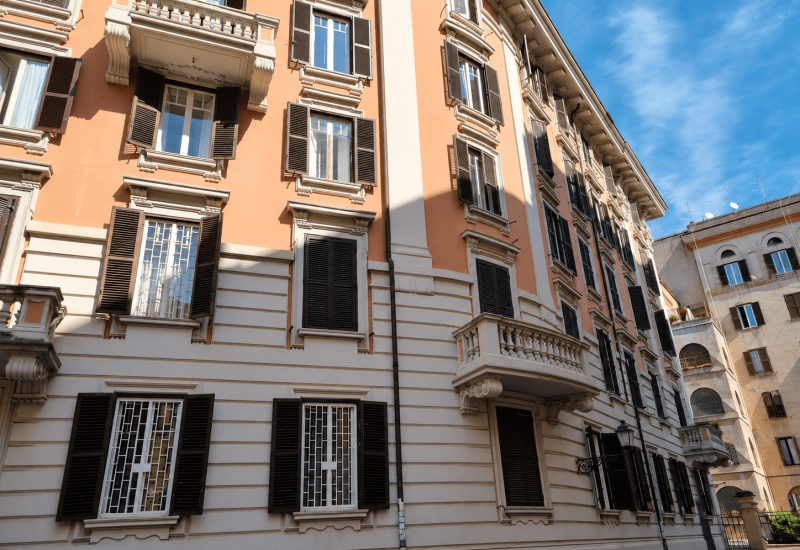
Rome has never been particularly good at separating the past from the present.
Ancient stone, Renaissance palazzi, baroque churches and ordinary apartment buildings exist almost on top of one another, while daily life simply continues between them. That layering gives Rome a quality very different from other European capitals: history is not somewhere you go to see. It remains part of the city people inhabit.
For us, that is what makes having a home here so compelling. Rome offers the possibility of living within something that has accumulated over centuries — without needing to turn that history into an occasion.
Discover our view ↓
Where Liora Looks
In Rome, we are drawn less to a famous address than to the relationship between the building, the street and the life around it.
The historic centre can be extraordinary, but only where it still feels residential enough to live in rather than simply pass through. Quieter streets, established quarters and buildings with beautiful internal courtyards can sometimes offer more than the most immediately recognisable piazza.
We look for places from which much of Rome can be reached on foot, while still offering that increasingly valuable moment when the city falls away behind the front door.
Why it belongs
Rome brings something to a collection that cannot really be recreated elsewhere: the experience of living with history rather than looking back at it.
A morning can begin in a building that has stood for several hundred years and continue through streets shaped by completely different centuries, without any of it feeling staged. Architecture, art, food and public life are woven unusually tightly together here.
That makes Rome culturally rich, certainly, but its value to us lies deeper than a list of museums or monuments. It is a city whose character is reinforced by ordinary repetition — simply living there allows you to notice more of what has survived.
What we look for
Rome contains beautiful apartments that are surprisingly difficult to live in.
A grand entrance, frescoed ceiling or historic palazzo can be seductive, but we look beyond first impressions. Light matters enormously, as do ceiling height, orientation, circulation and whether rooms still work for contemporary life without destroying what makes them special.
We pay attention to the details that a property photograph rarely explains: whether an internal courtyard brings calm or darkness, how much street noise reaches the bedrooms, whether upper floors are realistically accessible, and how the apartment performs during Rome’s warmer months.
Original stone, timber doors, old floors or fragments of decorative work can be wonderful. But we would rather preserve a few authentic elements beautifully than turn an entire apartment into a reproduction of its past.
When it comes into its own
Rome is perhaps most persuasive when the climate allows the city itself to become an extension of the home.
Spring arrives early, autumn stretches well into the year, and winter can bring those clear days when the city feels unusually open and the stone catches a softer light.
Summer has its own rhythm, but it also exposes practical truths about a home: shade, airflow, shutters and orientation suddenly matter far more than they did during a viewing in March.
That long cycle makes Rome much more than an occasional city break. It is a city whose character changes noticeably through the year, while remaining unmistakably Rome.
Our perspective
Rome rewards a slower kind of attention.
The obvious beauty is everywhere, but the more interesting questions begin once you imagine actually living behind one of those façades. How much light reaches the rooms? Does the building still work comfortably today? Is the street lively in a way that feels energising, or simply exhausting? Can historic character and modern ease coexist without one cancelling out the other?
That tension is part of what makes Rome compelling to us. The city is full of homes with extraordinary presence, but presence alone is not enough.
We would look for the places where history still feels alive without becoming heavy — where the architecture carries the past, but the home itself remains easy, calm and entirely relevant to the present.
For Liora, the right Roman home should not feel like a preserved fragment of history. It should feel like a place where history still knows how to live.
Tuscany
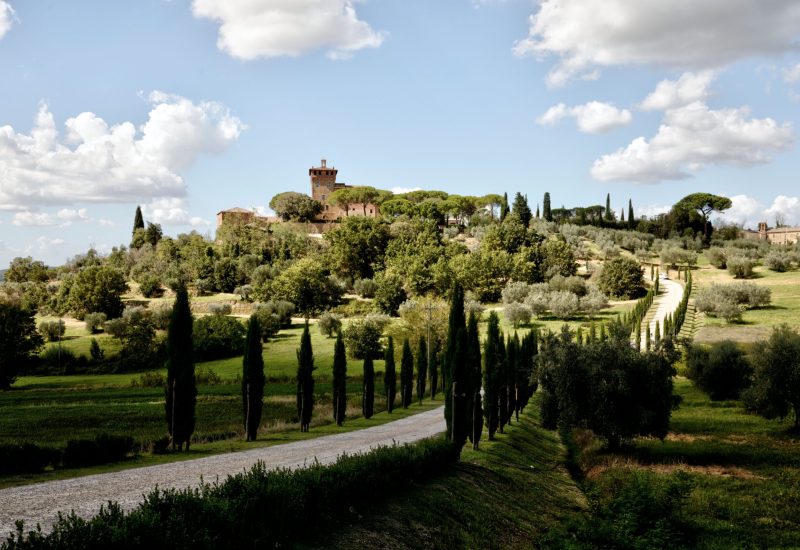
Tuscany may be one of the easiest places in Europe to romanticise — and one of the hardest to see clearly.
The cypress roads, old stone houses and ochre hills have become such familiar images that almost any property can look convincing for a moment.
We are interested in what remains after that first seduction: whether the house has a reason to be exactly where it is, whether the village nearby still matters, whether the land adds something to daily life, and whether the place would still hold our attention after the view has become familiar.
Discover our view ↓
Where Liora Looks
We would not begin with a list of famous valleys.
Some of the most desirable parts of Tuscany are also the places where property has become increasingly polished, seasonal and detached from ordinary life. We are just as interested in the edges of known areas, smaller towns and countryside where agriculture, villages and homes still coexist naturally.
Being twenty minutes from a good town may ultimately matter more than being able to name the valley from the terrace.
Tuscany should feel generous, not remote.
Why it belongs
Tuscany offers something increasingly rare: the pleasure of staying put.
A house here can hold a whole day. Breakfast moves outside, someone disappears with a book, lunch becomes later than intended, a walk replaces the plan to drive somewhere, and suddenly there was no need to “do Tuscany” at all.
That quality matters in a collection. Not every home needs to pull you outward. Some should make leaving feel entirely optional.
What we look for
We are suspicious of houses that perform Tuscany too perfectly.
Too many restored farmhouses have the same beams, the same terracotta, the same infinity pool and the same neutral interiors. Beautiful perhaps, but interchangeable.
We would rather find something with an awkward old door worth keeping, a room with proportions nobody would build today, a kitchen that can genuinely become the centre of the house, or a terrace whose position makes sense because people have been sitting there for generations.
The practical questions are just as important. Shade in August. Warmth in February. Water, access, land, maintenance and the distance to ordinary life.
Romance survives much better when the house actually works.
When it comes into its own
Tuscany changes character more than its summer photographs suggest.
Spring can still feel almost tender. By August the landscape has hardened under the sun and life retreats towards shade, stone floors and late evenings. Autumn brings another Tuscany altogether — harvest, cooler mornings, woodsmoke and the gradual return indoors.
Winter is the test we find particularly interesting.
A house that remains beautiful when the vines are bare, the pool is closed and the landscape has lost its postcard colours probably has something deeper going for it.
Our perspective
The danger in Tuscany is falling in love with Tuscany before falling in love with the house.
A long cypress drive and a valley view can make almost anything feel inevitable. We would want to come back the next morning and look again.
Is there somewhere you naturally want to sit? Does the house still have intimacy despite its scale? Can you imagine cooking there in November? Would children find their own corners? Does the nearest town feel like somewhere you might actually become known?
And if we mentally remove the cypresses, the wine and the word Tuscany from the brochure — is the house still good enough?
That is probably the more useful question.
Spain
Barcelona
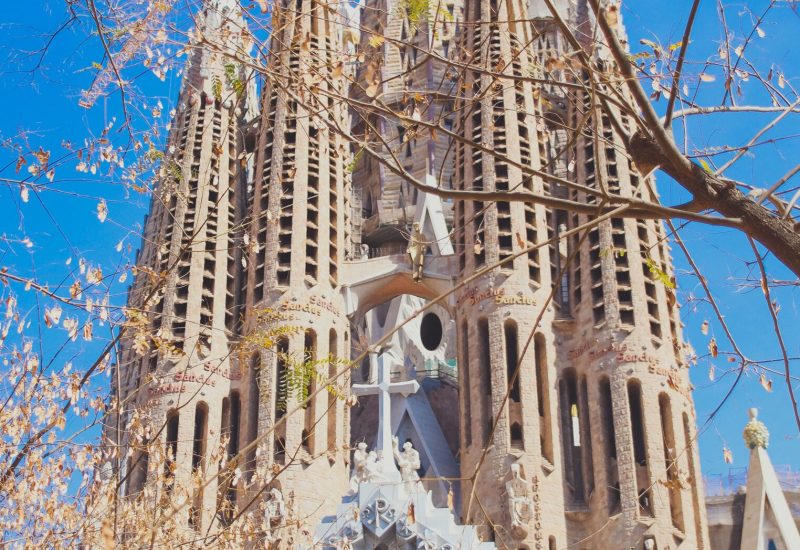
Barcelona is at its most interesting when it stops behaving like a single city.
Move a few streets and the rhythm changes. One neighbourhood is formal and architectural, another more intimate, another still almost village-like in the way people occupy its squares and streets.
That variety matters to us. Barcelona is not compelling because it offers a collection of famous buildings, but because culture here is embedded in ordinary city life — in neighbourhoods, markets, galleries, workshops, cafés, festivals and public spaces that are actually used.
For Liora, the question is therefore not simply where in Barcelona? but which Barcelona do we want to belong to?
Discover our view ↓
Where Liora Looks
We are drawn to neighbourhoods with a strong identity of their own — places where architecture matters, but where the street below matters just as much.
The Eixample will inevitably be part of that search, particularly where its remarkable building stock is matched by a genuine residential life. But Barcelona cannot be reduced to one grid or one architectural period.
The right location should reveal something distinctive about the city rather than merely offer proximity to its best-known addresses.
Why it belongs
Barcelona brings urban life at a more human scale to a collection. Culture is not confined to institutions here; it occupies streets, squares and neighbourhoods, while the Mediterranean remains a constant presence at the edge of the city.
That proximity to the sea changes the feeling of Barcelona without turning it into a resort. It gives the city a particular openness and makes it possible to move between architecture, culture and the waterfront as part of the same day.
What we look for
Barcelona has a great deal of architecture worth preserving, but we would resist buying an apartment simply because it contains the right decorative vocabulary.
A mosaic floor, ornate ceiling or Modernista detail should strengthen a good home, not distract from a poor one.
We would look first for an apartment whose proportions, building and location have integrity — and then ask what should be preserved, what can be simplified and what is better left alone.
The aim is not to create a beautiful “Barcelona interior”. It is to find a home that could only make complete sense here.
When it comes into its own
Barcelona does not depend on a single season or cultural calendar. The city remains active throughout the year, while the Mediterranean softens the transition between seasons and keeps outdoor life present for longer than in many other European cities.
In spring and autumn especially, the balance between city and sea can feel almost effortless — enough cultural intensity to keep returning, with the horizon never very far away.
Our perspective
Barcelona makes us want to look street by street rather than postcode by postcode.
Two apartments only a few blocks apart may offer completely different ways of living the city. The building entrance, the shops below, the width of the street, who occupies the square nearby and whether the neighbourhood still belongs primarily to its residents can matter as much as the apartment itself.
That is particularly important in a city where some of the most famous areas also carry the greatest pressure from visitors.
We would rather find a home embedded in a Barcelona that is still being lived than secure an address whose main value is that everyone already knows its name.
The city should continue outside the front door — not turn into a spectacle.
Mallorca
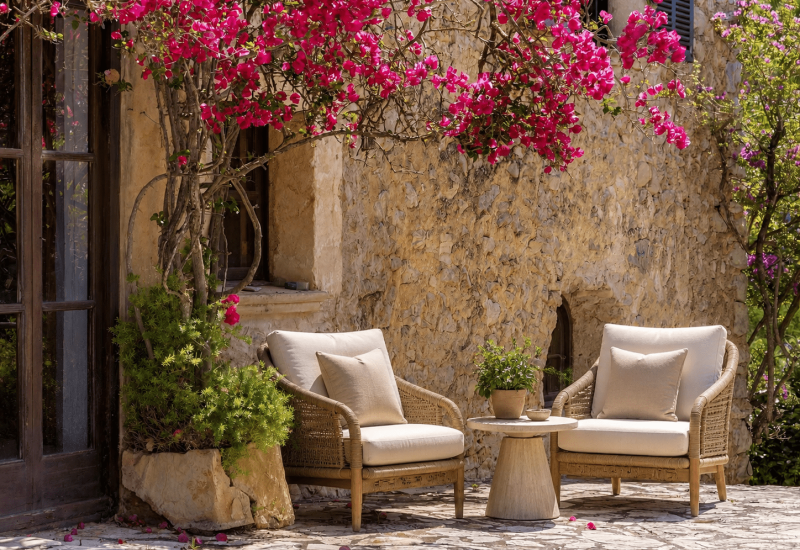
Mallorca reveals itself slowly once you move beyond the version most people arrive expecting.
The island shifts constantly between mountains, cultivated countryside, old towns and very different stretches of coast. Some parts feel almost enclosed by landscape; elsewhere the horizon opens towards the Mediterranean. Despite its relatively compact scale, Mallorca contains several distinct ways of living.
That variety is what interests us. A home here does not need to represent the whole island. It needs to belong convincingly to one particular part of it — and make that part worth knowing over time.
Discover our view ↓
Where Liora Looks
Our search is likely to concentrate around Fornalutx and Pollença, two places that reveal very different sides of Mallorca.
Around Fornalutx, the appeal lies in the Serra de Tramuntana itself: old stone houses, terraced slopes, citrus and olive groves, and villages where the landscape still dictates the scale and character of building. The setting can feel remarkably secluded without being far removed from Sóller and the wider life of the valley.
Pollença offers something different. It is a town with its own rhythm, market, cultural life and year-round community, while the mountains, Formentor and the northern coast remain close at hand. That balance between a real town and a much larger landscape is particularly interesting to us.
We are not looking for “Mallorca” in the abstract. We are looking for the part of the island where a home can feel rooted enough to belong — and connected enough to be lived throughout the year.
Why it belongs
Mallorca offers an unusually broad life within a relatively small territory.
Mountains, agricultural countryside, Palma, old villages and very different coastlines can all belong to the same week without requiring a change of base. The island also retains strong local traditions around food, wine, markets and village festivals; the official calendar runs from Sant Antoni and Sant Sebastià in winter through Easter, harvest celebrations and local fiestas later in the year.
That matters because it gives the island depth beyond the beach season.
A home here could offer the intimacy of island life without requiring life to become narrow.
What we look for
Mallorca is another place where we would be wary of houses that advertise their location too loudly.
A finca does not become more authentic because every room contains stone walls, rough timber and beige linen. Nor does an infinity pool compensate for a house that has lost its relationship with the land.
We would look for the things that are harder to stage: old proportions that still make sense, shade where it is actually needed, a courtyard or terrace that belongs naturally to the daily life of the house, mature planting, local stone used because it belongs there rather than because it photographs well.
And water, wind and heat matter. On an island, seemingly romantic details become practical questions surprisingly quickly.
The strongest house should feel Mallorcan without needing to demonstrate it.
When it comes into its own
Mallorca makes a strong case for being used well beyond summer.
Spring brings the island into flower and is particularly suited to walking and mountain life. Autumn remains mild, with harvests, local gastronomy and cultural events taking over from the intensity of summer. Even winter has an established local calendar and a very different, quieter version of the island. The official tourism board itself presents Mallorca as a year-round destination, with mild winters and distinct seasonal uses.
For us, that matters more than 300 days of sunshine.
The real question is whether a home still draws you back in January, when there is no reason to go to the beach.
Our perspective
Mallorca is one of the destinations where we still want to look before we claim to know.
What already interests us is the contrast between the version of the island most people arrive expecting and the much more layered place that appears once you begin moving inland.
We would want to understand which villages still function as communities, where international demand has enriched a place and where it has begun to hollow it out, how the island feels outside the summer season, and whether a house belongs to a living landscape or simply occupies a beautiful one.
The Serra de Tramuntana may be the obvious place to start, but obvious is not the same as inevitable.
Mallorca will earn its place in a collection when we find the part of the island — and the house within it — that still feels worth discovering after the postcard has disappeared.
United Kingdom
London
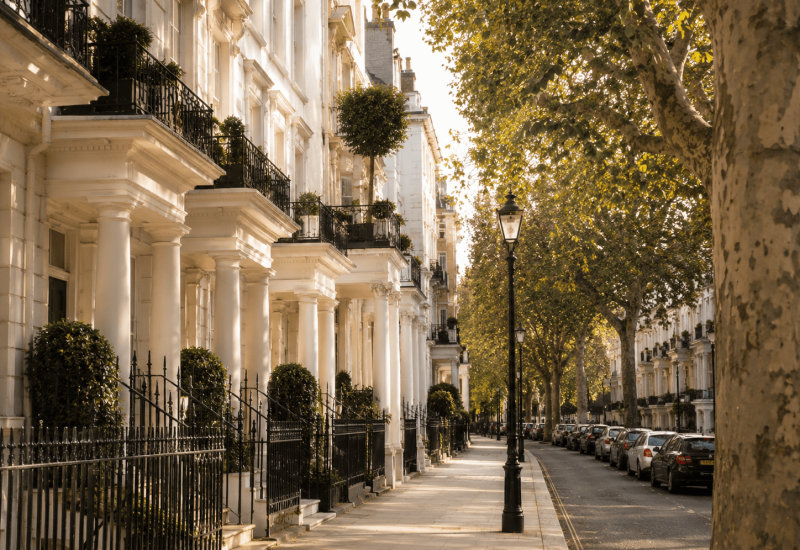
London is too large to ever feel like just one city.
Eventually, everyone seems to create a smaller version of it: a few streets, a park, a theatre, the restaurants they return to, the route they prefer across town. Beyond that familiar territory lies one of the richest cultural cities in Europe, constantly giving reasons to cross it again.
That tension interests us. London can be intensely local and extraordinarily international at the same time.
For a second home, perhaps the real question is not where in London should we buy? but which London would we want to make our own?
Discover our view ↓
Where Liora Looks
We are drawn to established neighbourhoods where the quality of daily life is already apparent before you enter the apartment.
Architecture matters, but so do trees, parks, good local shops, transport, the walk home in the evening and the particular character of the streets around you. London’s cultural life is not confined to the centre; its boroughs have identities and cultural ecosystems of their own.
We would rather find a beautiful home in a neighbourhood we genuinely want to belong to than stretch for an address whose prestige does most of the talking.
Why it belongs
London’s cultural range is difficult to exhaust.
Theatre one evening, contemporary art the next; a major museum followed by a tiny gallery; music, books, architecture, fashion, food — and a creative life that keeps shifting rather than simply preserving what came before. London City Hall itself describes the breadth and quality of the city’s arts and culture as central to London’s identity.
That gives London a particular role within a collection.
Paris may invite you to follow culture more deeply. Rome surrounds you with history. London keeps introducing something you did not know you were looking for.
What we look for
London property can make square footage unusually expensive, which makes us even less interested in paying for space that does not improve the home.
We would look for good rooms rather than simply more rooms: proportion, natural light, architectural detail, storage that actually works and somewhere the household can come together comfortably.
A garden square, a glimpse of green, a small terrace or simply a quiet outlook can alter city life disproportionately.
And we would be cautious with immaculate developments that offer every amenity but leave very little sense of London once you step inside.
The home should have an address, not merely a postcode.
When it comes into its own
London does not wait for good weather to become itself.
Its cultural year keeps moving through autumn and winter, while spring and summer change the balance completely — parks fill, gardens open, evenings stretch and parts of the city that felt inward suddenly move outside.
That makes London useful in a collection for reasons that have little to do with a traditional holiday season.
You come because something is happening, because someone is there, because you want a change of pace — or because for a while you simply want to live in London.
Our perspective
London makes us particularly attentive to what surrounds the home.
A beautiful apartment can be a poor choice if every ordinary errand becomes complicated. Conversely, a slightly less obvious property can become extremely compelling when the park is around the corner, the underground is close, the street feels good after dark and there are places nearby you would genuinely use.
And because London is so large, ten minutes in the wrong direction can change daily life far more than the property particulars suggest.
We would therefore spend almost as much time walking away from a prospective home as walking through it.
In London, the neighbourhood is not the setting for the property. It is part of what you are buying.
Croatia
Istria
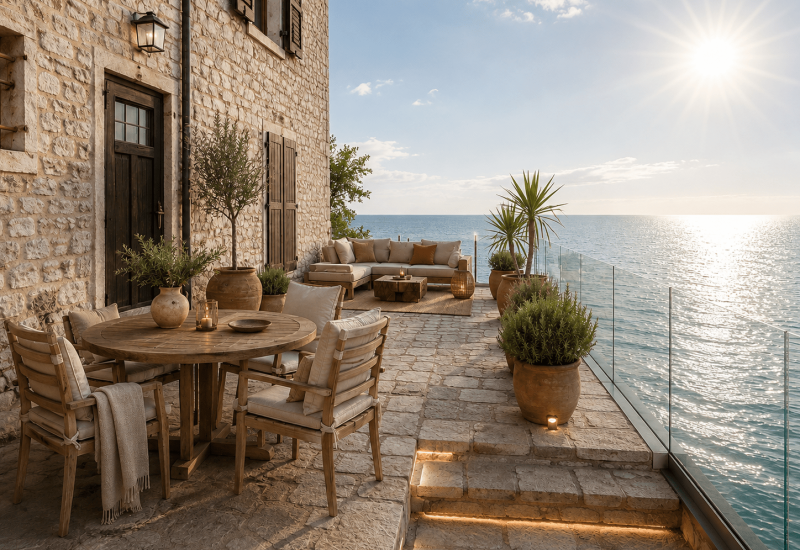
Istria still feels as though it has not told everyone the same story yet.
Along the coast, old towns meet the Adriatic with a strong Venetian imprint. Drive inland and the language changes: vineyards, olive groves, forests and small hill towns begin to take over.
That contrast is what first caught our attention.
Istria may be compact, but it does not seem one-dimensional. And for Liora, that makes it worth understanding properly before deciding what kind of home should represent it.
Discover our view ↓
Where Liora Looks
Rovinj is our natural starting point.
It offers a rare combination of a historic town, the sea and enough life beyond the summer season to make us curious about it as more than a coastal address. The official regional material also places Rovinj within a much wider western Istrian landscape rather than treating it as an isolated resort.
But our search need not stop at the water.
The interior around towns such as Motovun and Grožnjan opens another possibility altogether — wine country, olive groves, old stone settlements and the Motovun Forest, which sits at the heart of Istria’s truffle territory.
For now, we want to understand how those two Istrias relate before deciding where the strongest Liora home lies.
Why it belongs
What makes Istria interesting is not that it can imitate Tuscany or Provence at a lower latitude.
It has its own mixture of influences: Adriatic and continental, Venetian and Central European, coastal and agricultural. Food makes some of those layers particularly visible — local Malvasia and Teran, olive oil, truffles, taverns and producers are not imported lifestyle accessories but part of the region’s own economy and traditions.
And the scale is appealing.
A home here could give access to sea, countryside and small historic towns without requiring each of them to become a separate journey.
That possibility deserves a closer look.
What we look for
Because Istria is still new territory for us, we would resist deciding too quickly what an “Istrian Liora home” ought to look like.
An old stone house inland may ultimately prove more compelling than a polished villa closer to the coast. Or Rovinj may offer exactly the combination of architecture, life and sea that makes a town home work here.
What we already know is what we will not compromise on: architecture with integrity, privacy where it matters, outdoor space that belongs naturally to the house and a setting that still has a life beyond tourism.
We would also be suspicious of properties that have been renovated into a generic Mediterranean international style.
The point of coming to Istria would be to find Istria.
When it comes into its own
Summer explains the coast easily. The more interesting question is what happens afterwards.
Autumn, for example, has a distinct local identity inland: the white-truffle season runs through the latter part of the year, with truffle events concentrated around the Mirna valley and Motovun area. Wine, olive oil and harvest culture add another rhythm beyond the beach season.
Spring may tell us something else again — when the landscape becomes the reason to be there before the Adriatic becomes the obvious focus.
For Liora, those less obvious months will be important. They will tell us whether Istria is somewhere members will want to live repeatedly, rather than somewhere they simply enjoy once in summer.
Our perspective
With Istria, our perspective is deliberately still being formed.
We know enough to be intrigued, but not enough to pretend that a few beautiful photographs of Rovinj and Motovun amount to understanding a region.
We want to know what Rovinj feels like on an ordinary week outside summer. Which inland towns still carry daily life rather than mainly visitors. How long it really takes to move between coast and countryside. Where the best local producers are. Which landscapes remain beautiful in November. And what kind of architecture still feels genuinely rooted rather than newly packaged as “Istrian”.
That process is not a weakness in the selection.
It is the selection.
A destination should not enter a Liora collection because we already know how to market it. It should enter because, after looking more closely, we discover that we genuinely want to keep coming back.

A life in five places
Curated co-ownership of characterful homes across Europe.
STAY CLOSE
The first collections are taking shape. Discover the homes, ownership model and what it means to become a member.
For enquiries: hello@lioravision.com
© 2026 Liora Vision · Legal Notice · Privacy Policy · Terms · Cookies
