
Chamonix: Between Summer and Snow
9 september 2026
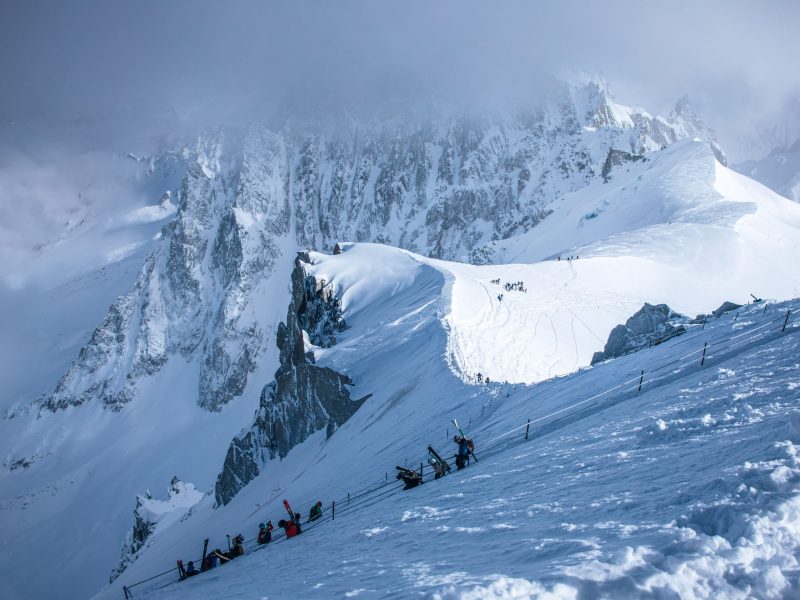
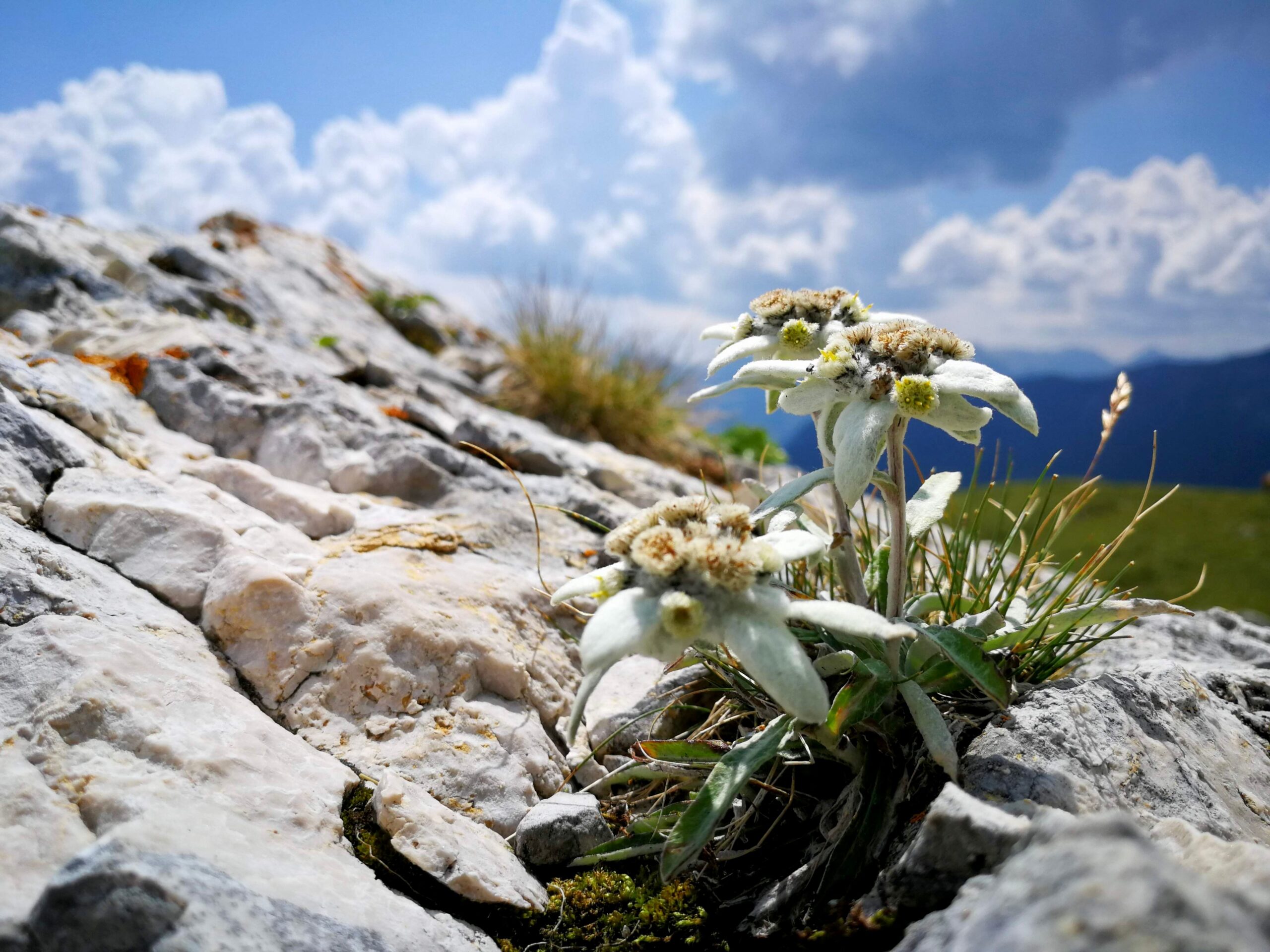
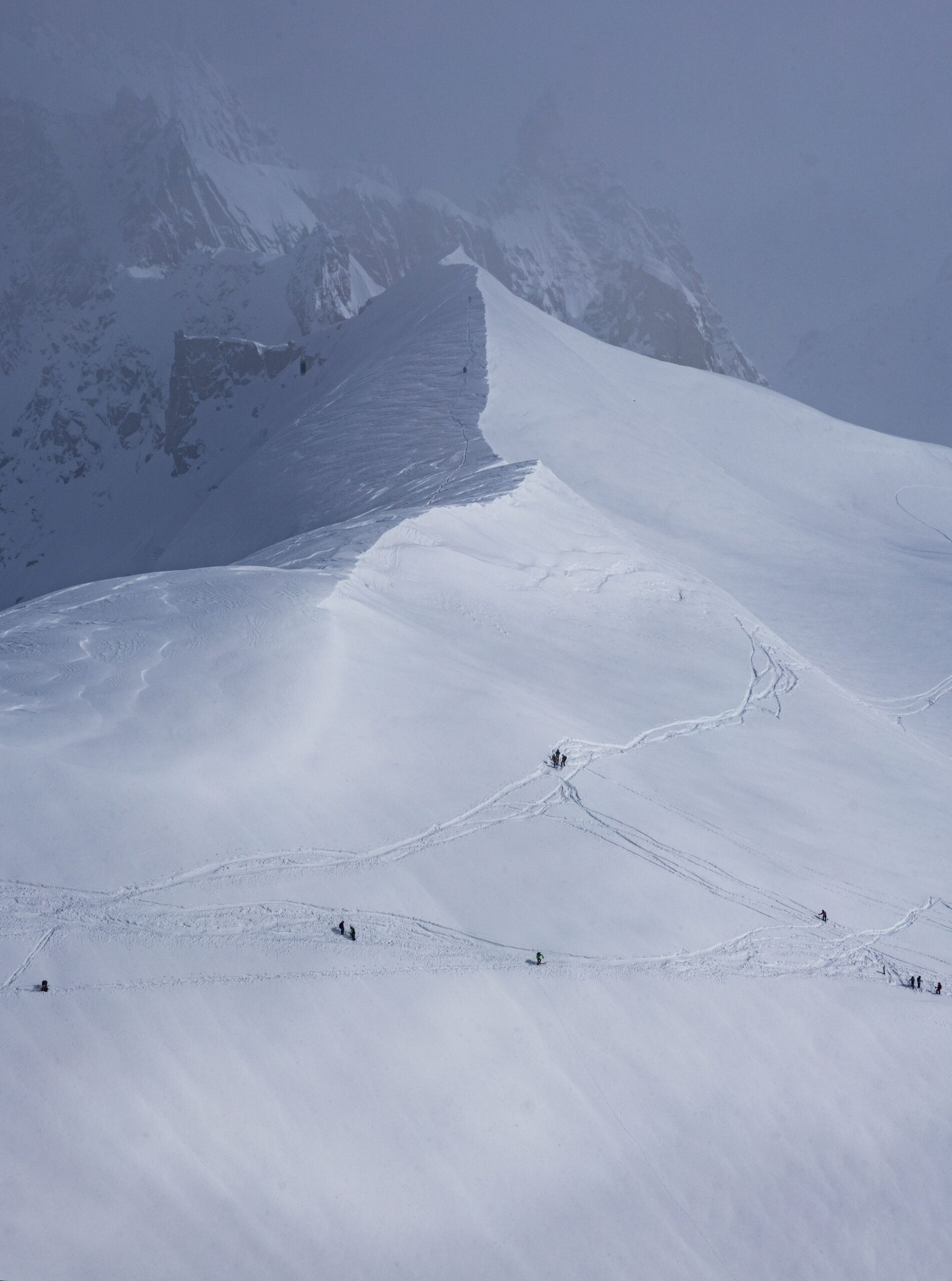
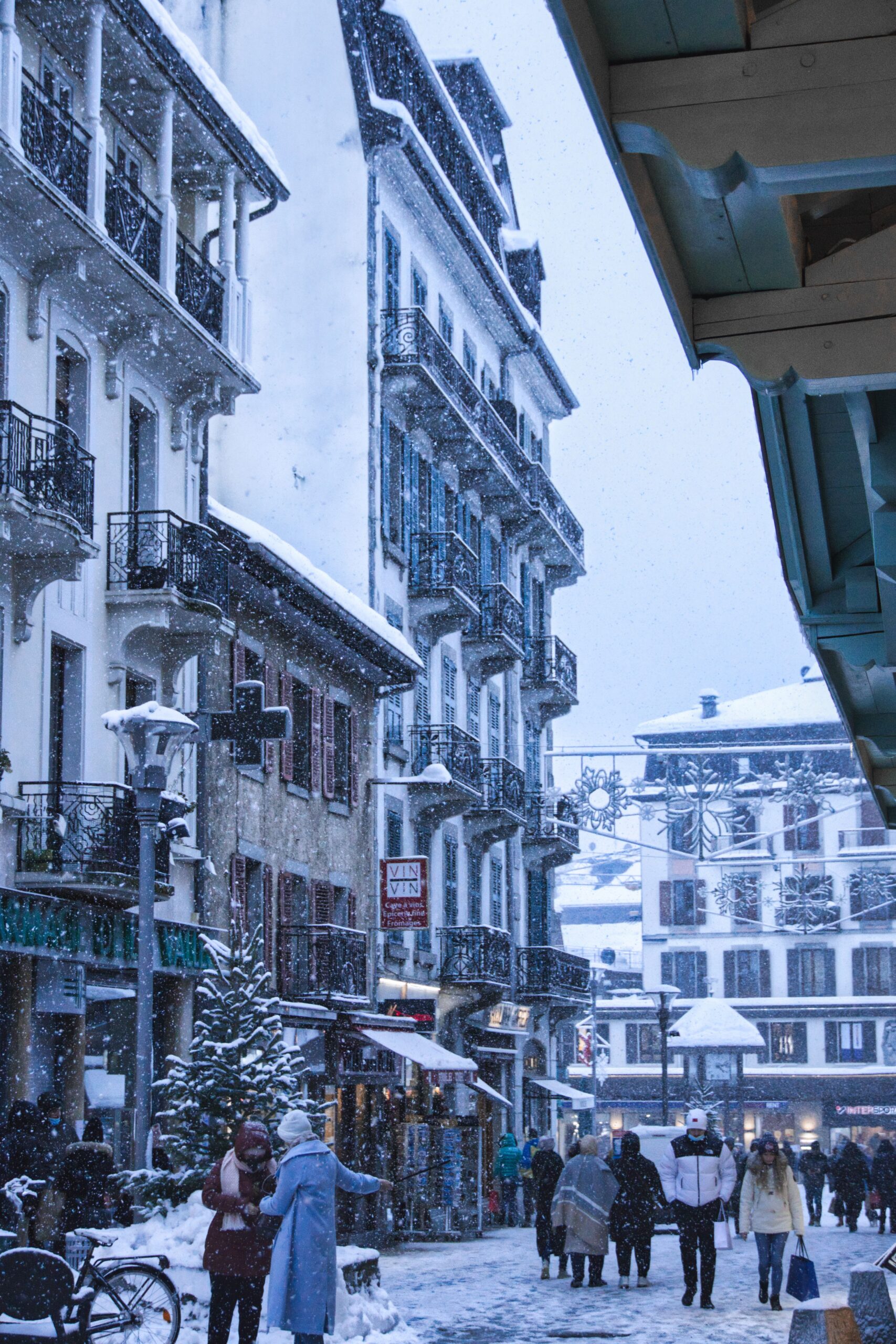
In the Mont Blanc valley, autumn arrives vertically. While the forests around Chamonix are still changing colour, snow can already be returning to the high peaks, leaving the valley suspended for a few weeks between the season that has ended and the one gathering above it.
Autumn Arrives From Above
Mountain destinations are usually described by their strongest seasons.
Chamonix has two.
Winter comes with skis, snow reports and lifts carrying people towards terrain that would otherwise take hours to reach. Summer opens another vertical world: long hiking days, climbing routes, refuges and trails that draw attention continually upwards.
Autumn belongs fully to neither.
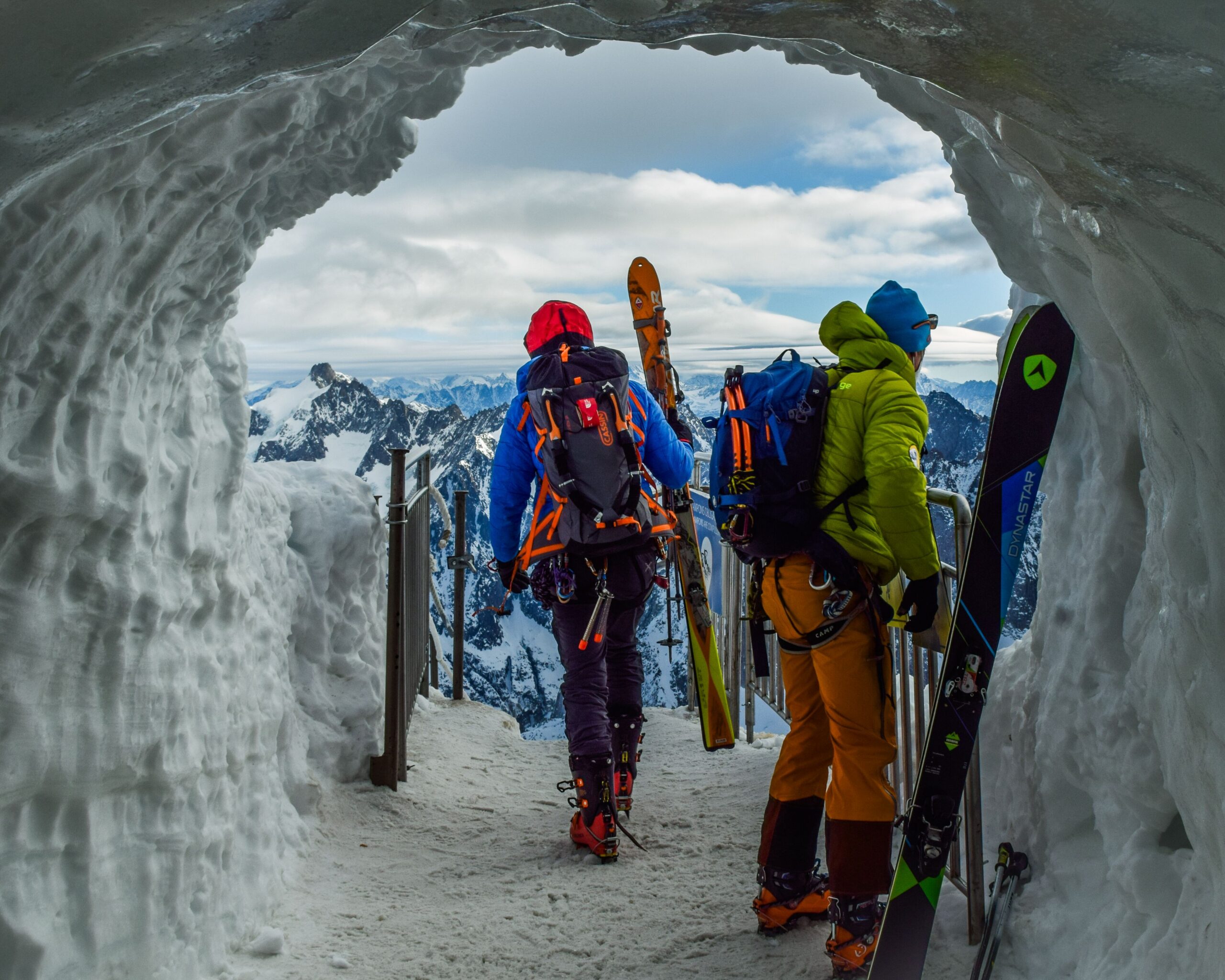
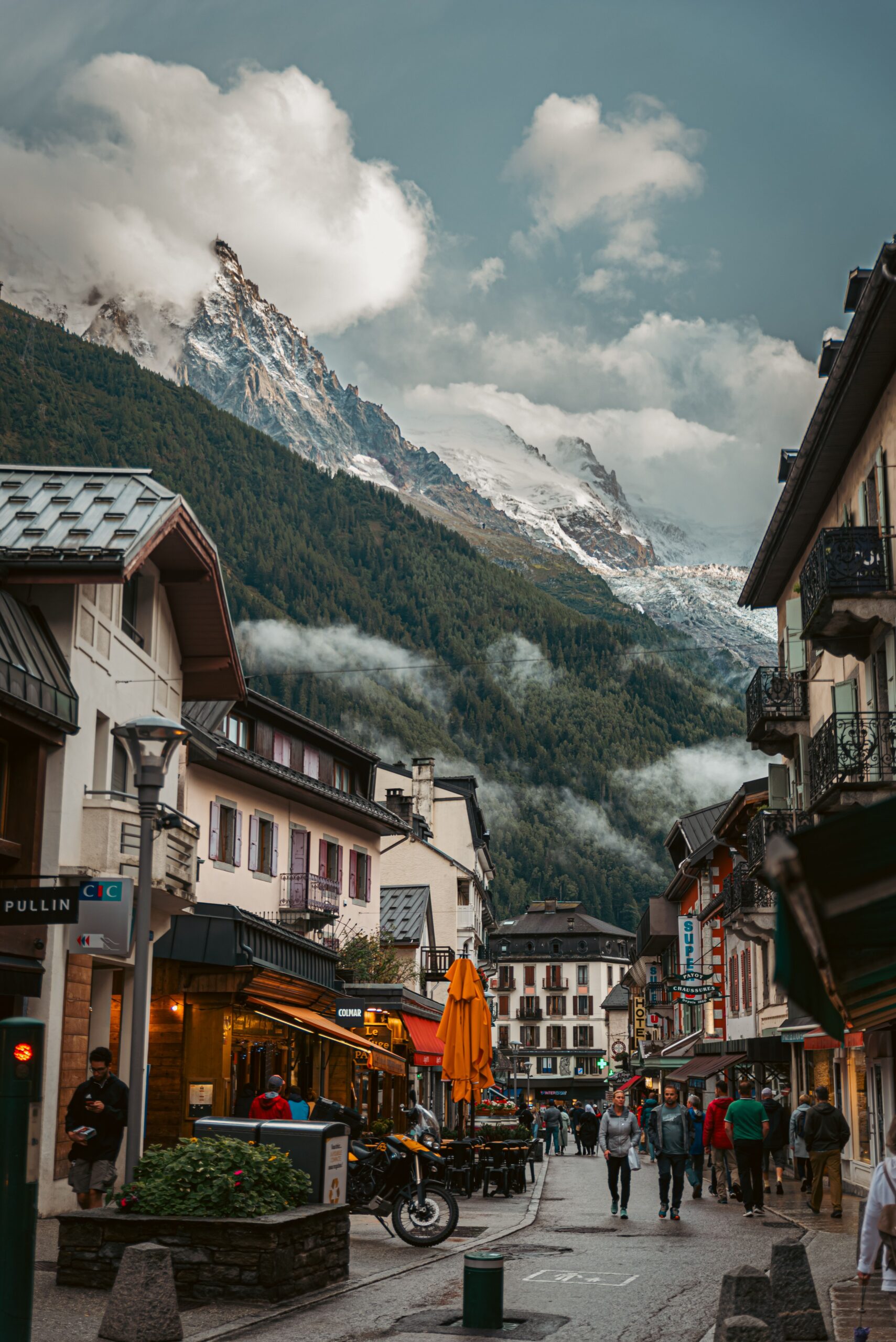
The highest summer days are ending. Some lifts begin to close. Daylight contracts. Forests of larch, beech and birch move towards yellow, copper and red while the higher peaks may already have returned to white. Chamonix’s own autumn guide describes precisely that contrast between coloured forests and newly snow-dusted summits. Chamonix’s official guide to autumn in the valley
It is tempting to call this simply the quiet season.
But quiet is only the consequence.
The more interesting thing is that autumn allows several seasons to exist in one view.
At valley level, the day can still feel mild. A few hundred metres higher, conditions may already belong to a different calendar. A south-facing terrace can hold afternoon warmth while a neighbouring slope has moved into shade.
The mountain does not disappear between summer and winter.
It becomes more complicated.
Seventeen Kilometres, Five Different Worlds
The Chamonix-Mont-Blanc valley is surprisingly compact.
From Servoz to Vallorcine it measures roughly 17 kilometres, with five principal village-resorts along the way: Servoz, Les Houches, Chamonix-Mont-Blanc, Argentière and Vallorcine. At its widest, the valley is only around 800 metres across. Explore the five villages of the Chamonix-Mont-Blanc Valley
On a map, that can make them look like variations of the same place.
They aren’t.
Mountains distort distance.
Height changes temperature and vegetation. Orientation determines when the sun arrives and when it disappears. A settlement tucked beneath one slope can experience the day differently from another only a few kilometres away.
The valley itself runs between two great mountain systems: the Mont Blanc massif on one side and the Aiguilles Rouges on the other. Its inhabited floor sits around a thousand metres above sea level, while the terrain rises thousands of metres almost immediately around it.
In high summer, spectacular objectives can obscure these subtler differences.
Autumn makes them easier to notice.
A valley that looked like one destination begins to divide into smaller worlds.
When the Lifts Give the Mountain Back
Chamonix is not simply a town surrounded by mountains.
It is also a remarkable piece of mountain infrastructure.
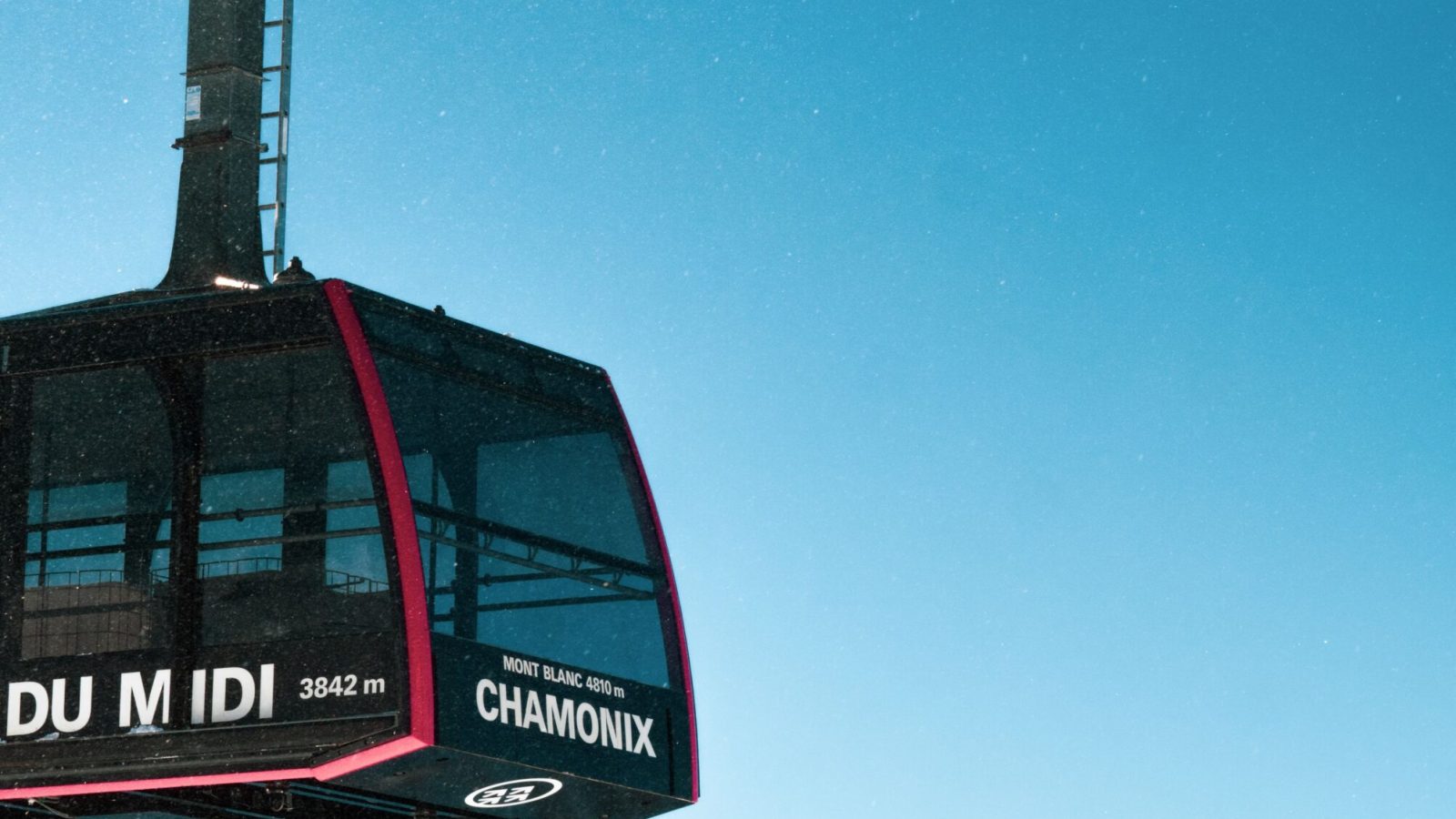
Cable cars, gondolas and mountain railways compress altitude. They allow breakfast in town and, not long afterwards, a view from thousands of metres higher. In winter and summer, that machinery dramatically enlarges the territory of an ordinary day.
Autumn gradually contracts it again.
The 2026 lift calendar shows the transition clearly. The Aiguille du Midi and Montenvers–Mer de Glace continue well into autumn, while principal summer operations at Brévent, Flégère, Balme and Les Houches end at different points during September. Dates remain weather- and operation-dependent. Current Mont Blanc lift opening calendar
That change matters even for someone with no intention of collecting summits.
When fewer lifts operate, the shape of the day changes.
A walk may begin at the valley floor instead of at 2,000 metres. A village can become the destination rather than the place one passes through on the way upwards. Weather acquires more authority.
The mountains become slightly less convenient.
And perhaps more present.
Infrastructure makes extraordinary landscapes accessible.
Autumn reminds us that accessibility and landscape are not the same thing.
“The mountains create a local clock”
Chamonix Is Only the Middle
Chamonix inevitably dominates the valley’s identity.
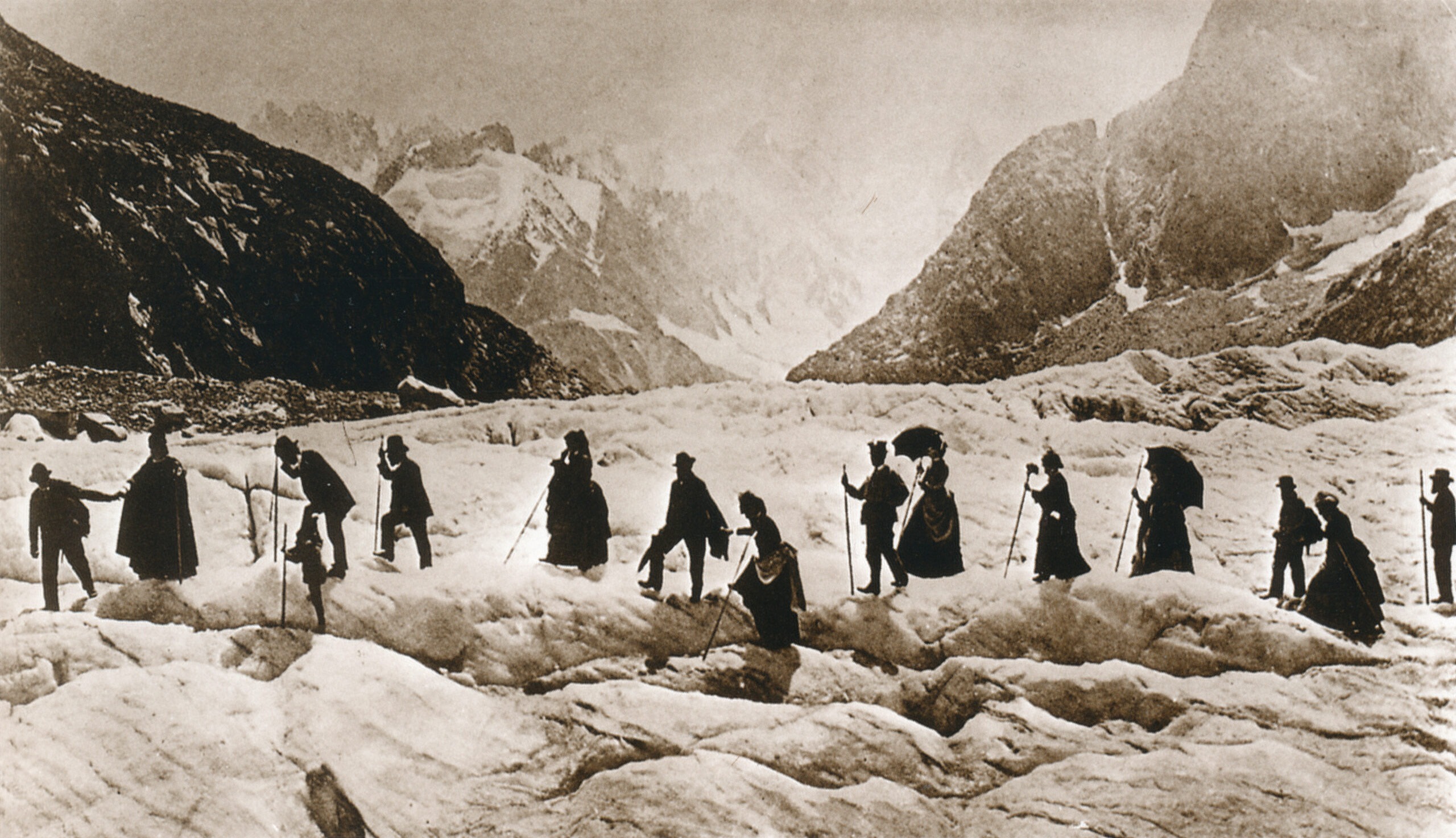
Its history justifies some of that weight. In the eighteenth century it was already becoming internationally known through accounts of glaciers and early exploration. The first ascent of Mont Blanc by Jacques Balmat and Michel Paccard in 1786 helped transform a farming valley into one increasingly connected with guiding, hospitality and mountain travel. The history of Chamonix and the valley
Today Chamonix remains the cosmopolitan centre: more shops, restaurants, hotels, museums and international movement.
But follow the valley in either direction and its character shifts.
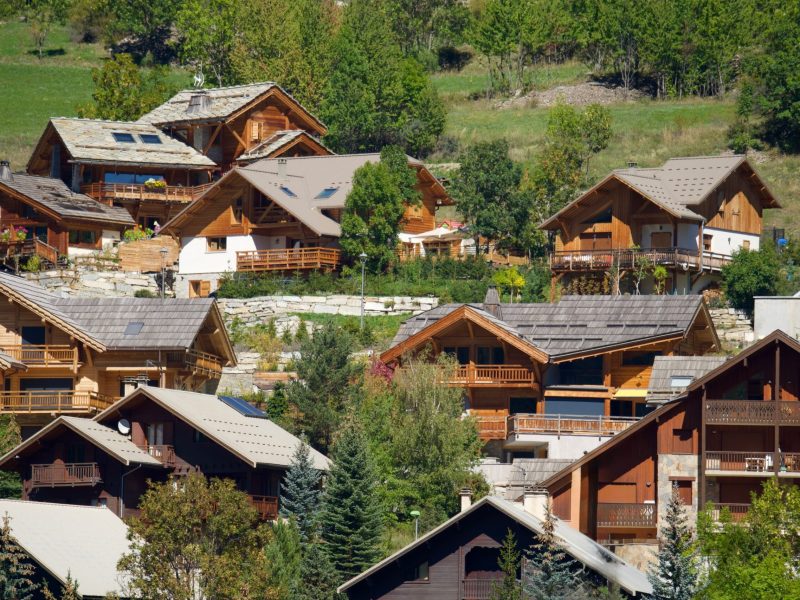
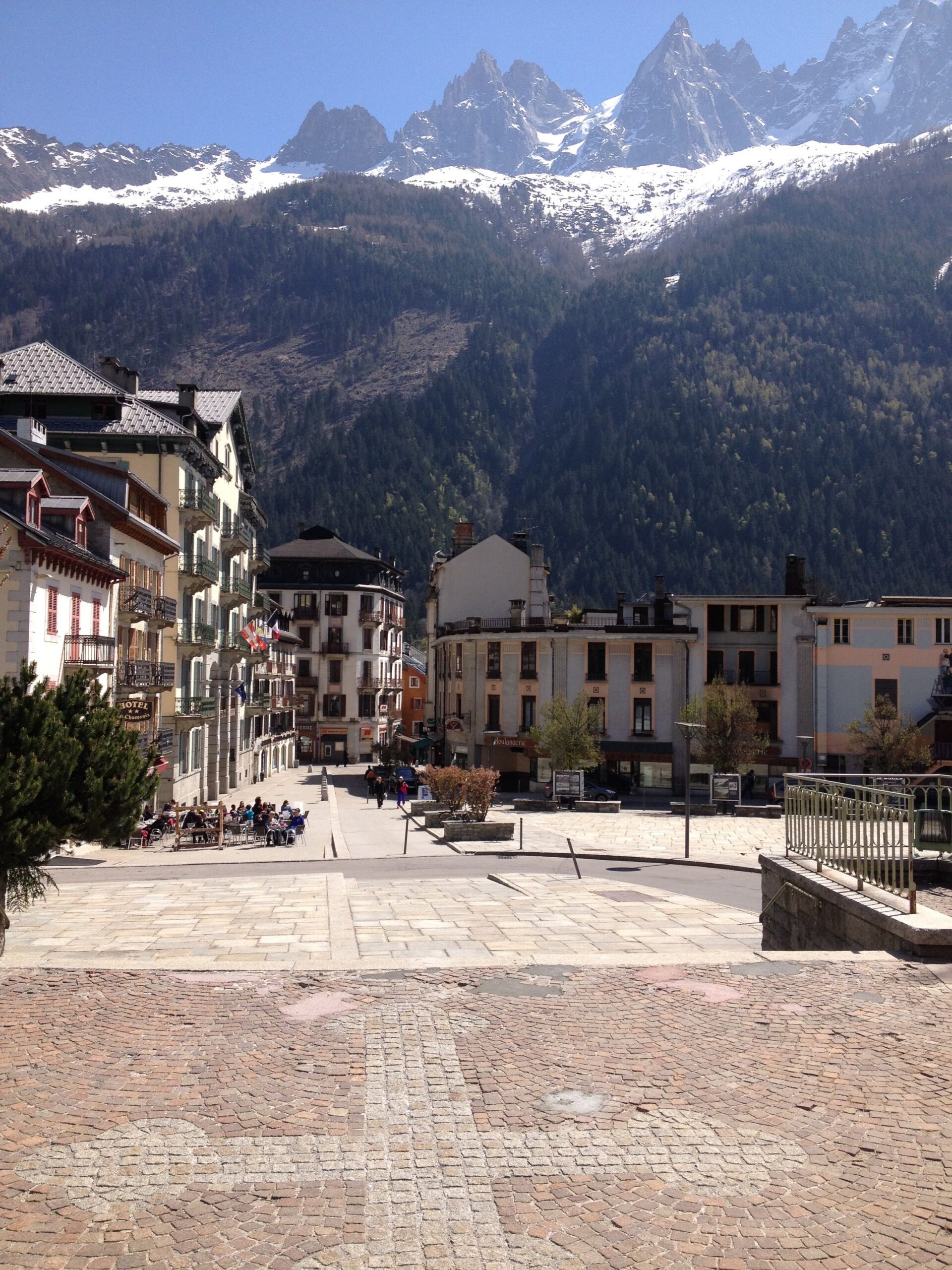
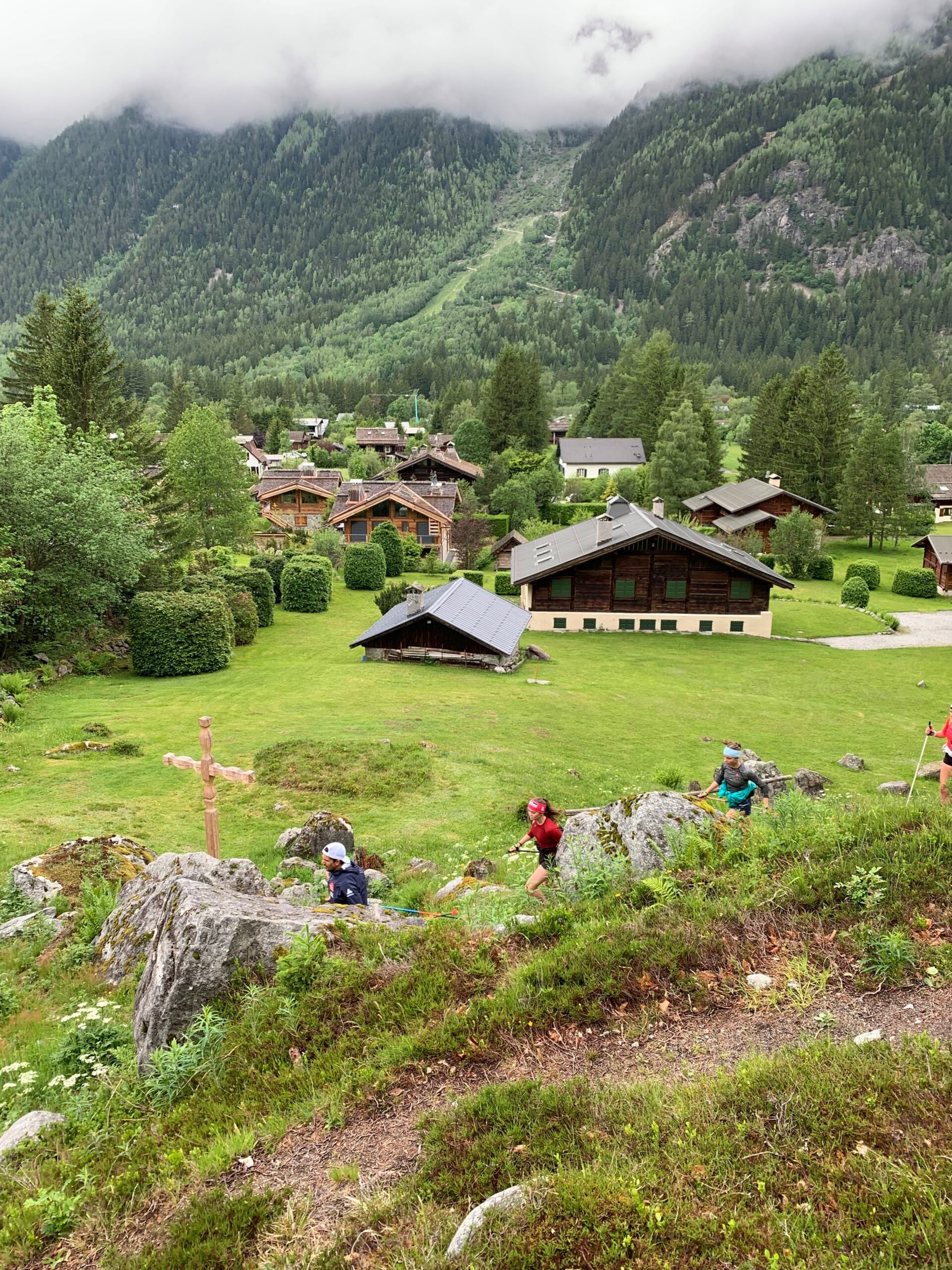
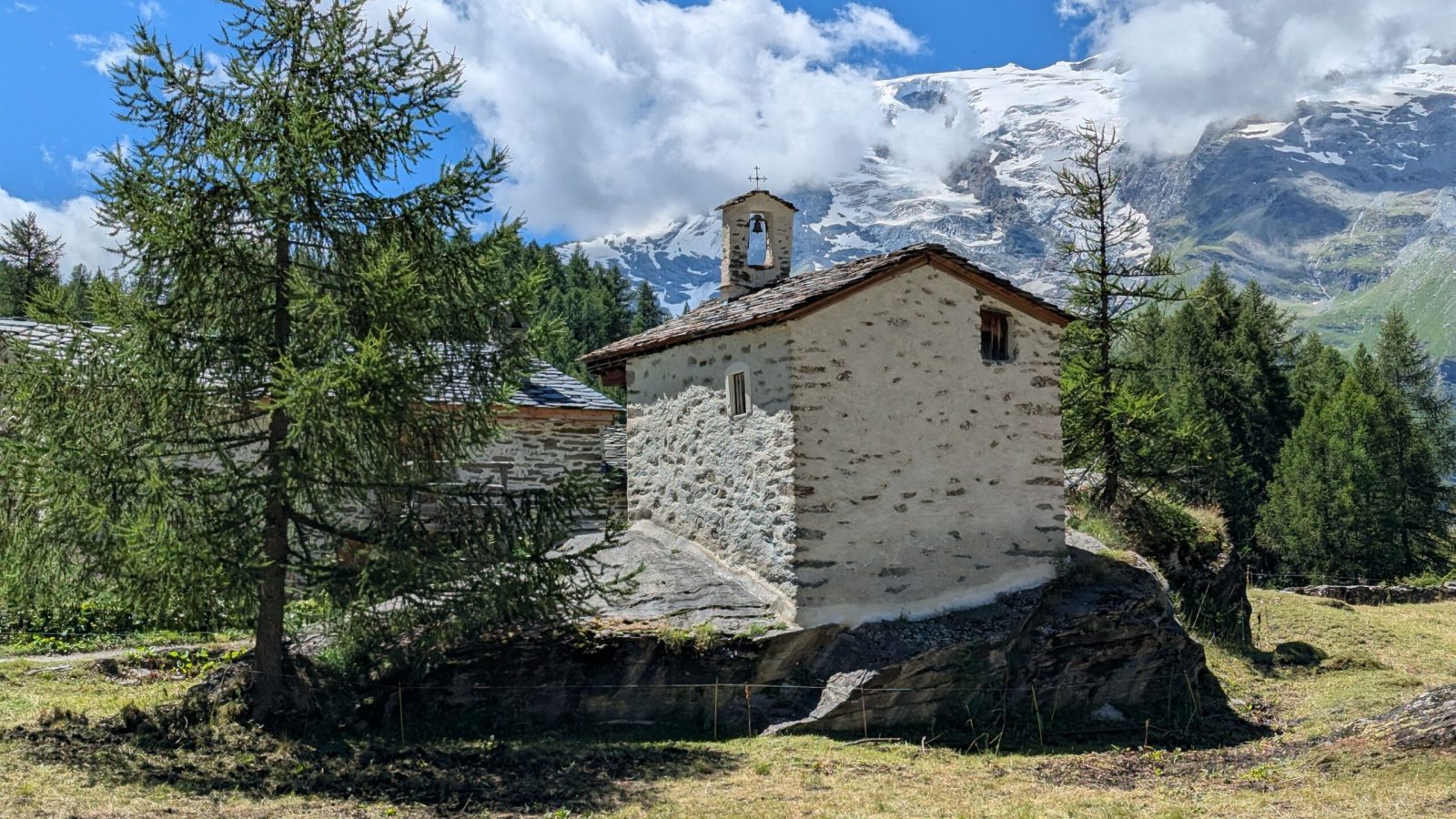
At Servoz, old farmsteads, fountains, oratories and communal bread ovens still give the village a visibly rural architectural layer.
Les Houches spreads differently along the valley and up its slopes, with a less urban relationship to the mountain than central Chamonix.
Beyond Chamonix, Argentière sits closer to the severe high-mountain geography associated with the Grands Montets and Argentière glacier.
And at the far end, beyond the Col des Montets, Vallorcine turns towards another cultural geography altogether. Settled historically by Walser people from the Upper Valais, its architecture still includes raccards — raised grain stores more usually associated with the Swiss Valais and unusual in France. Discover Vallorcine and its hamlets
Same valley.
Different mountain lives.
A Red Train Through the Weather
One of the best ways to understand those differences is not to drive.
Take the train.
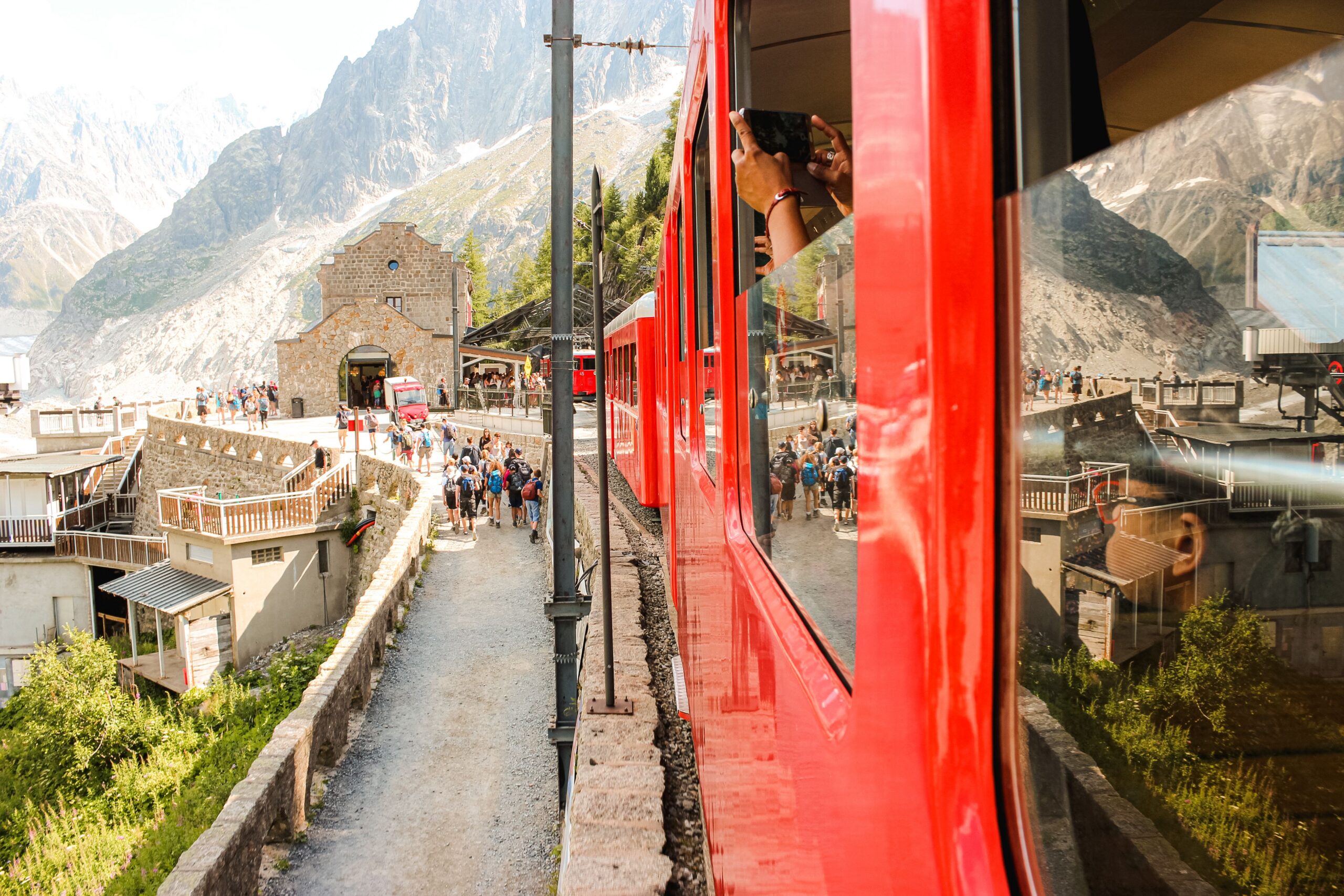
The MontBlanc Express runs along the valley, linking Chamonix towards Les Houches and Servoz in one direction and Les Praz, Argentière and Vallorcine in the other before continuing towards Martigny in Switzerland. Public transport in the Chamonix valley
Its practical usefulness is obvious.
Its editorial value is better.
Cars tend to erase the spaces between destinations. A train gives every stop a name.
Les Bossons.
Les Praz.
Argentière.
Vallorcine.
Travelling this way makes visible something the word Chamonix tends to flatten: the valley is a chain of settlements rather than a resort with outlying accommodation.
That distinction becomes increasingly important when returning rather than visiting once.
One place may have the morning light you prefer. Another a walk you repeat. Another a market, bakery or café that slowly becomes part of the week.
The great mountain remains the common reference.
Daily life becomes local.
Lower Paths, Longer Looks
Summer mountain culture rewards ambition.
Higher. Further. Earlier.
Autumn complicates that instinct.
As the season advances, daylight shortens and conditions at altitude become less predictable. Trails that were straightforward in August can meet early snow or ice. Lift access reduces. A route chosen from an old guidebook may no longer correspond to what is sensible on the day.
That does not make walking less interesting.
It changes what counts as a worthwhile walk.
The valley floor, forests and lower balcony routes regain importance. So do paths connecting settlements and landscapes that high summer can reduce to approaches towards something more dramatic.
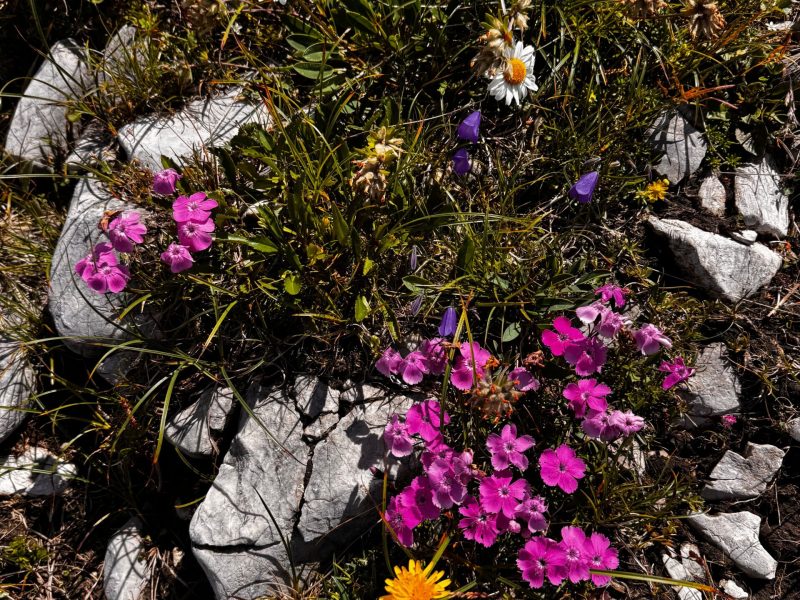
The protected Aiguilles Rouges Nature Reserve makes the vertical structure particularly visible. Its environments rise from spruce and larch woodland through alpine grasslands and wetlands towards increasingly mineral high-altitude terrain. The Aiguilles Rouges Nature Reserve
In autumn, those layers stop changing at the same speed.
A forest can still belong to autumn while the ridge above it has already moved on.
There is pleasure in allowing the walk to end before the landscape does.
Not every path needs a summit at the end of it.
Turn Around to See Mont Blanc
There is another useful contradiction in the valley.
To see Mont Blanc well, it often helps not to be on Mont Blanc.
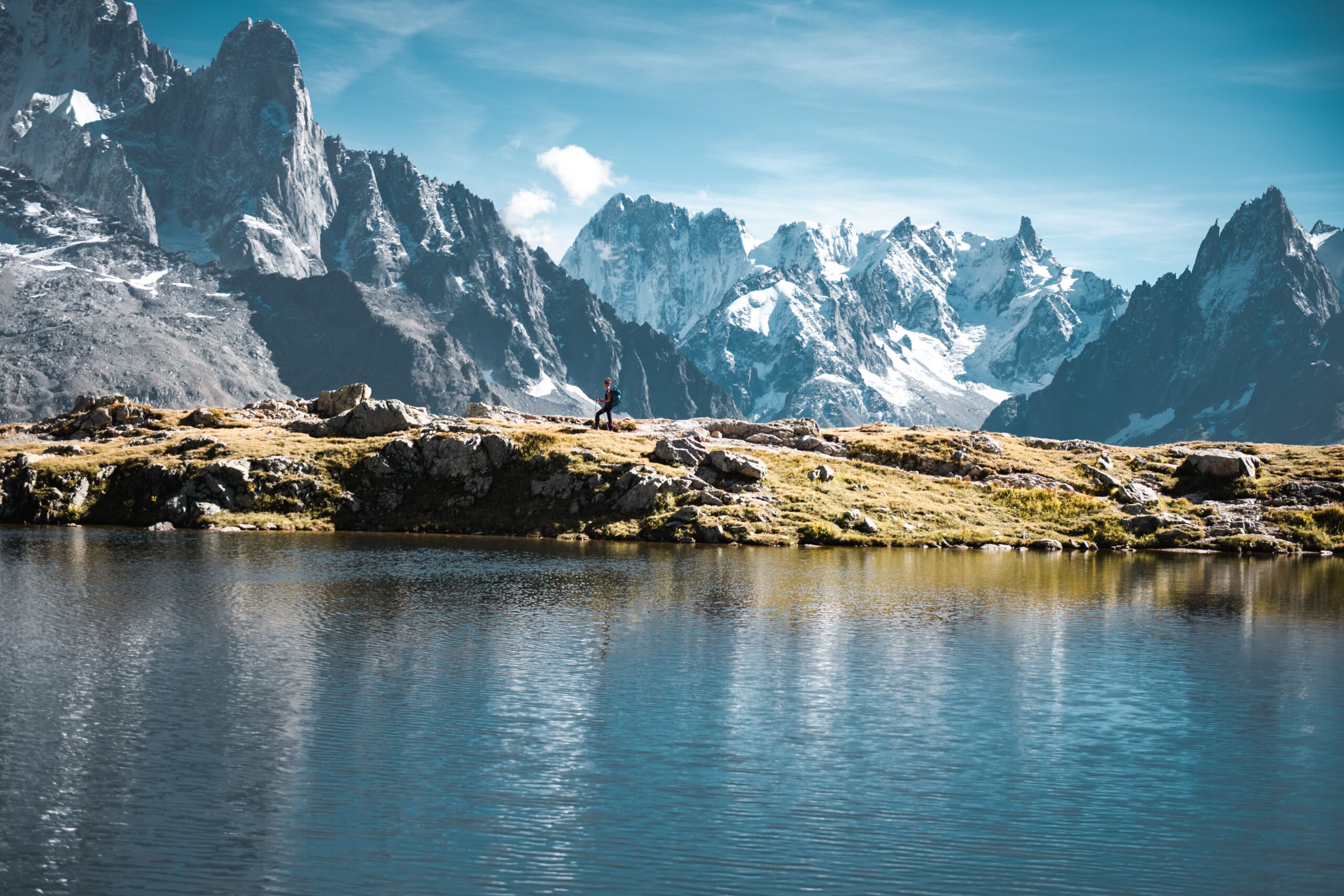
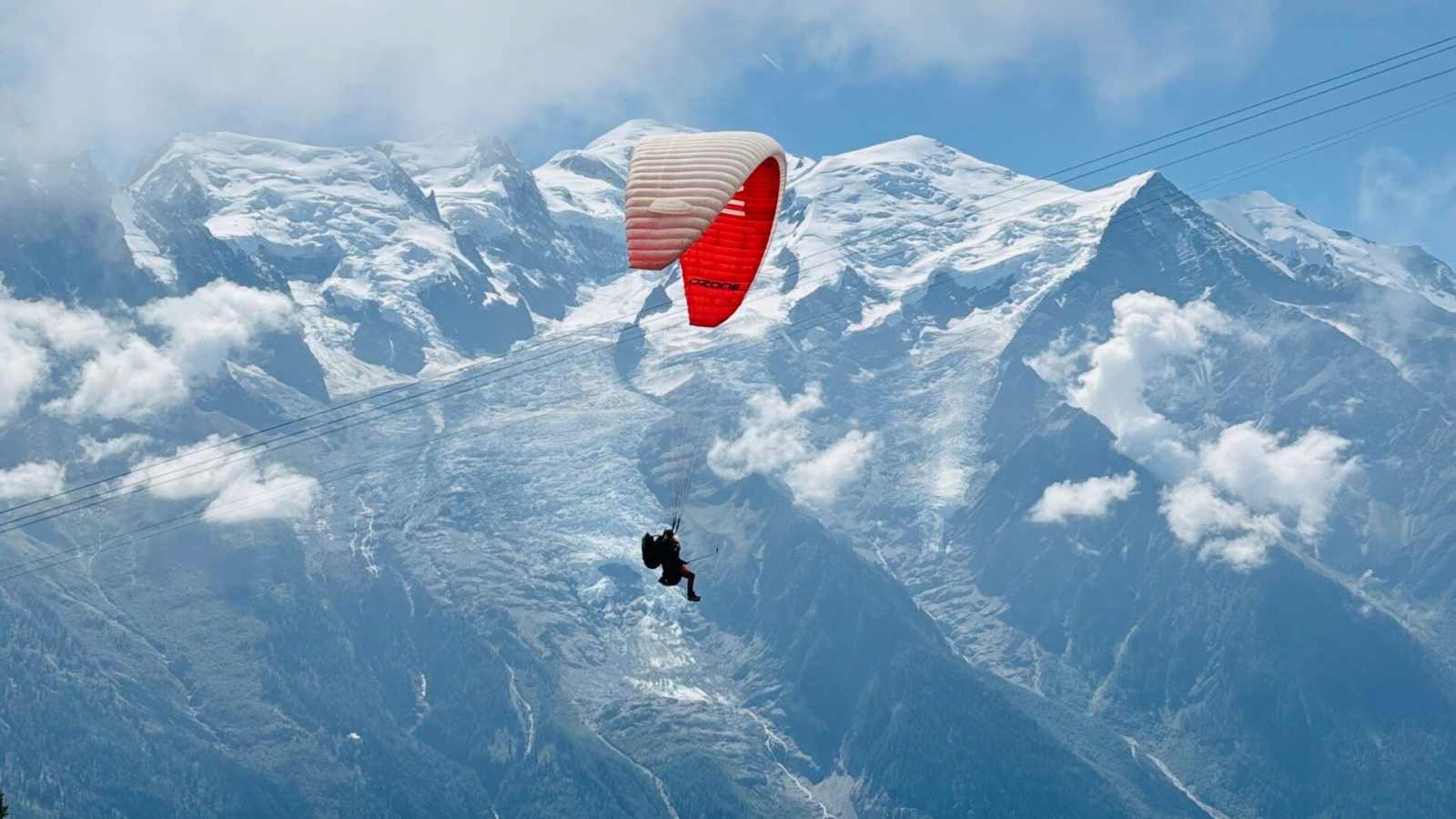
The Aiguilles Rouges side of the valley provides some of its most celebrated views precisely because it stands opposite the massif. Trails around Flégère, the Chéserys and Lac Blanc look across the valley towards the Mont Blanc chain rather than disappearing beneath it.
Distance brings proportion.
From below, the scale of the mountain can overwhelm the landscape around it. From the opposite side, the whole structure becomes easier to read: glaciers, ridges, forest, settlements and valley floor occupying different levels in one composition.
Autumn adds another layer.
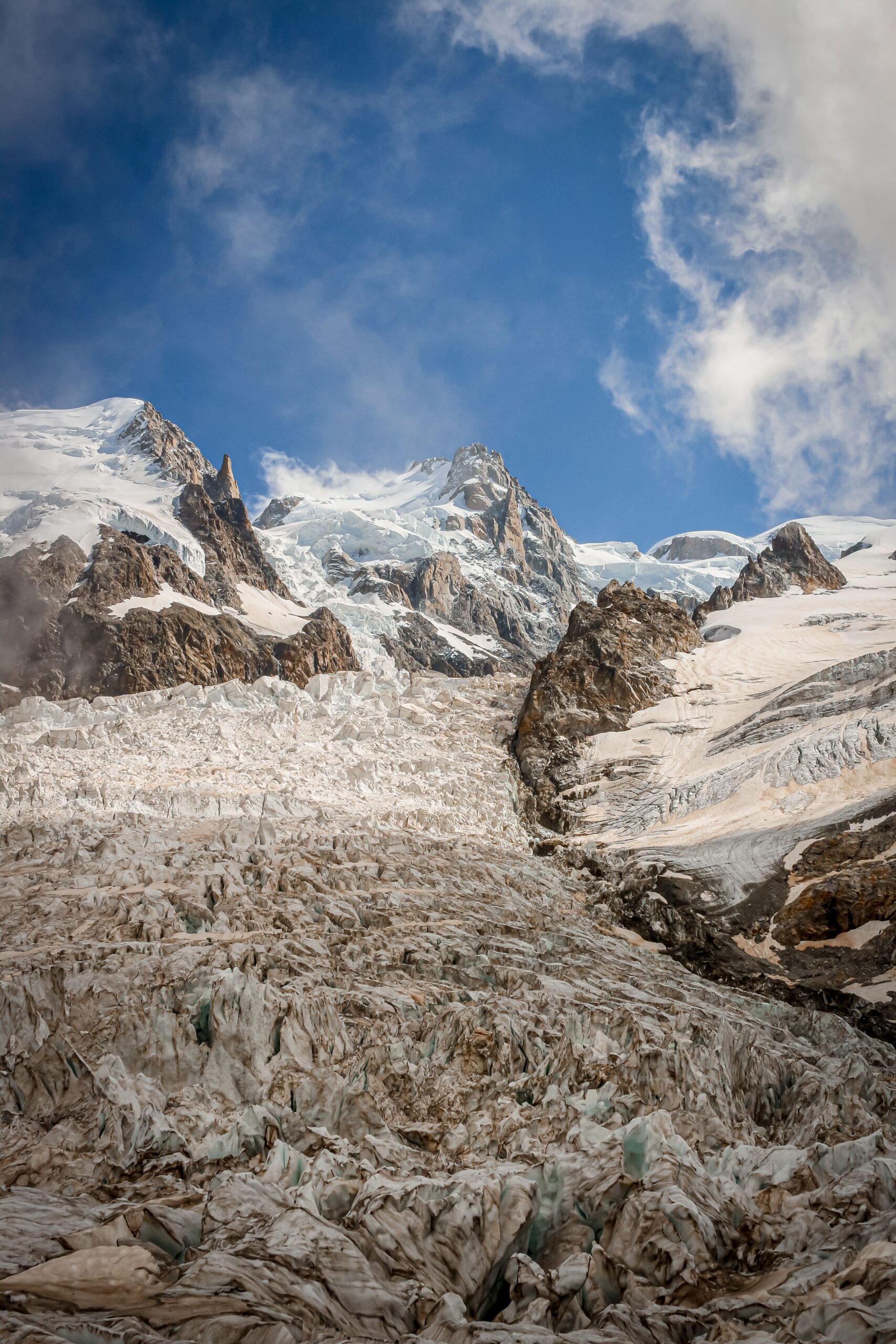
Colour collects lower down. Snow defines the upper contours. The transition between them becomes visible.
The mountain becomes less an object to conquer and more a piece of geography.
Sometimes the most revealing thing to do in Chamonix is turn around.
When the Mountain Moves Indoors
Chamonix has one important advantage over resorts whose entire cultural identity depends on snow.
It has accumulated a life around the mountain as well as on it.
That became especially visible in July 2026 with the reopening of the former Musée Alpin as the new Musée du Mont-Blanc, after a major renovation. The museum traces the relationship between people and the mountain through exploration, adaptation, art, science and changing Alpine landscapes. The new Musée du Mont-Blanc
In high summer, a museum can feel like competition for a mountain day.
In autumn, it fits differently.
A grey afternoon no longer feels like a failed plan. It becomes permission to look at why the town exists in its present form at all.
The same is true of architecture.
Chamonix’s old hotels record stages in the evolution from farming valley to international mountain destination. Village churches, farm buildings and newer resort architecture tell another story: every generation has had to decide how to inhabit this terrain.
Autumn brings the eye back down from the summit.
Sometimes into a room.
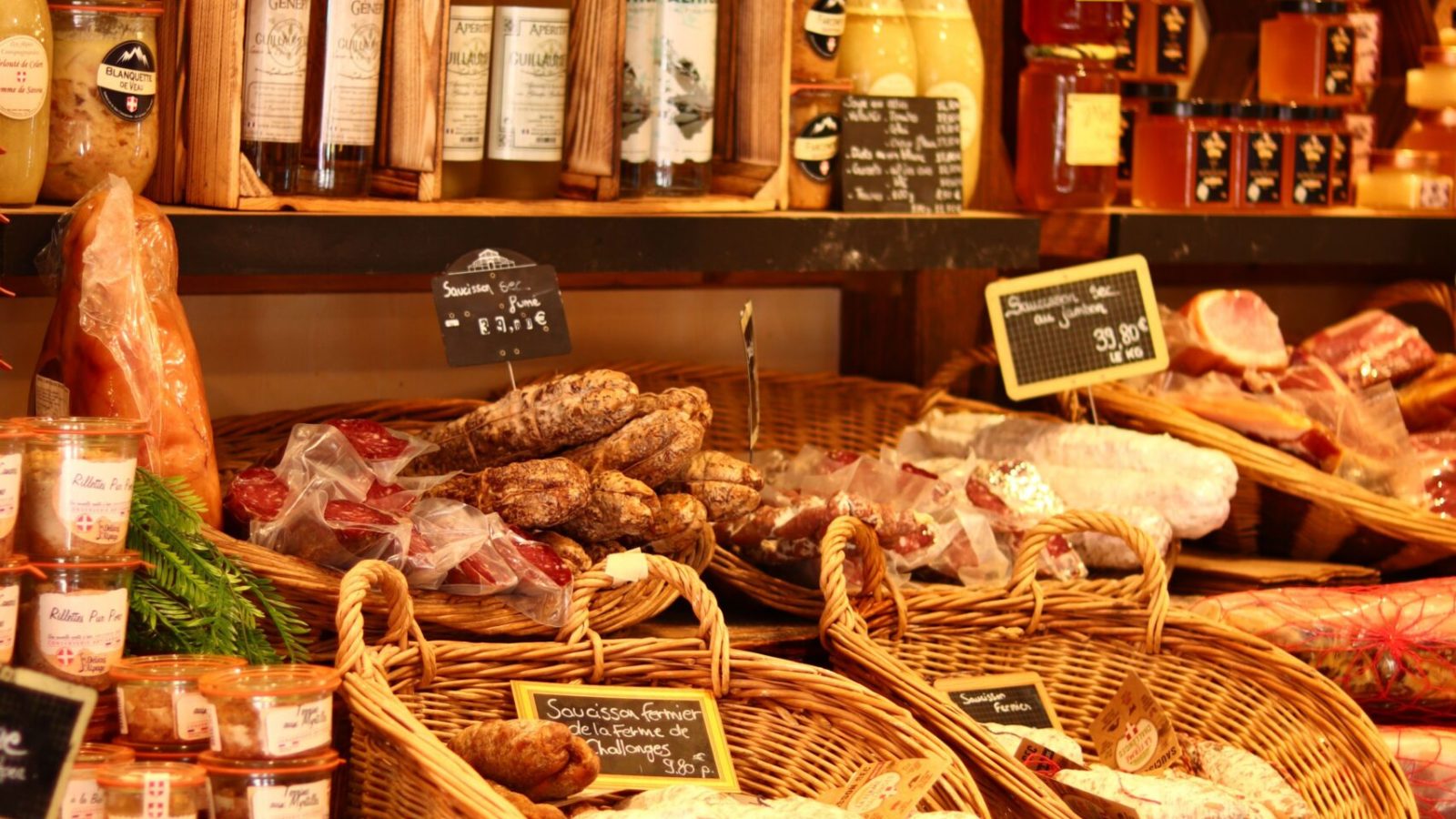
The mountains create a local clock.
Quiet Is Not the Same as Empty
The idea of an empty shoulder season is seductive.
It is also too simple.
Autumn does reduce parts of the summer machinery, but the valley does not simply switch itself off.
In autumn 2026, the official calendar still includes the Trail des Aiguilles Rouges in late September, events in Servoz, the Petits Asticots festival in October and the Chamonix Photo Festival later that month. Chamonix’s 2026 autumn programme
Transport also shifts rather than disappears. Chamonix Mobilité moves to an autumn timetable from 7 September through 18 December.
That is a more interesting kind of seasonality.
Some things close.
Others become easier to see.
The test of a place between seasons is not whether every summer or winter service remains available.
It is whether enough remains without the peak season holding it up.
A bakery does not need snow.
A school does not need a cable car.
A village street does not become irrelevant because a lift has stopped.
The quieter season shows which parts of a destination belong to visitors — and which belong to the place itself.
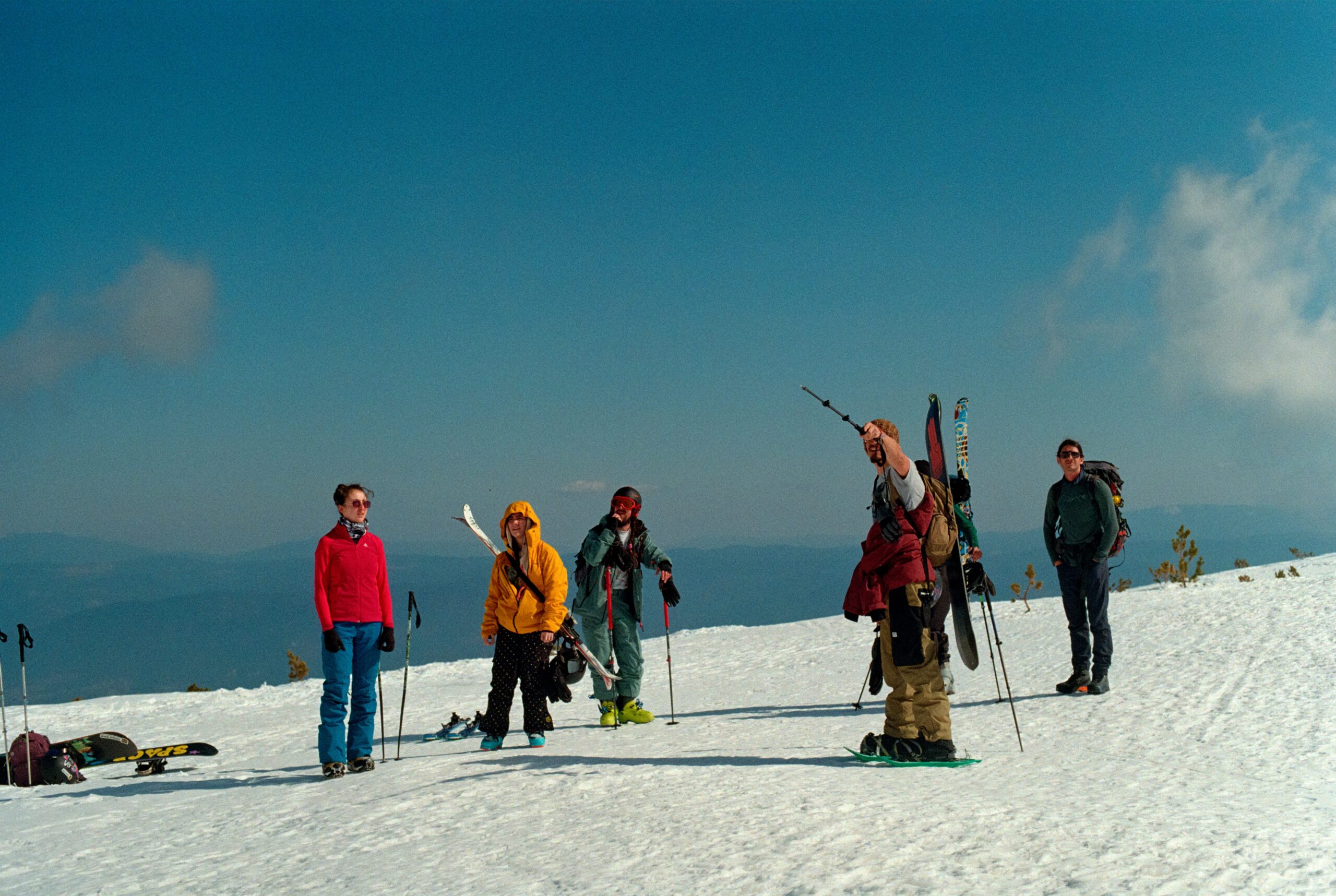
The Sun Leaves Early Here
Autumn changes light everywhere.
Mountains make the change physical.
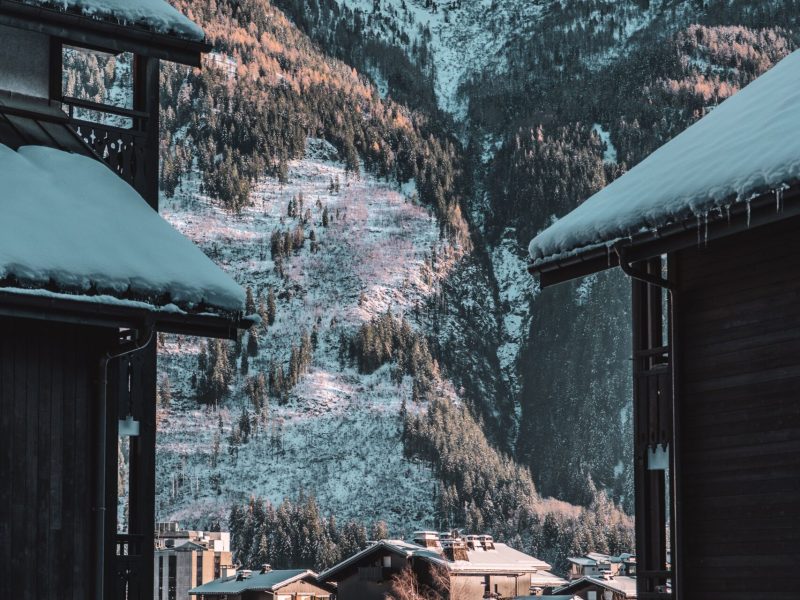
A valley can have plenty of daylight left while the direct sun has already vanished behind a ridge. One side remains illuminated while the other moves abruptly into shade. The temperature can follow quickly.
That matters when walking.
It matters even more when living in a house.
A terrace that seemed perfect at midday can become cold long before sunset. A room with modest windows but good southern orientation may prove more valuable than a larger room turned towards the wrong slope. Morning sun and afternoon sun become entirely different commodities.
The mountains create a local clock.
Once noticed, it is difficult to stop seeing.
Which roofs still catch the light?
Where does frost remain?
Which garden disappears into shade first?
Which side of the valley holds the last warmth?
In July, orientation can be disguised by abundance.
In autumn, the landscape begins to explain the architecture.
A House Reads Autumn Differently
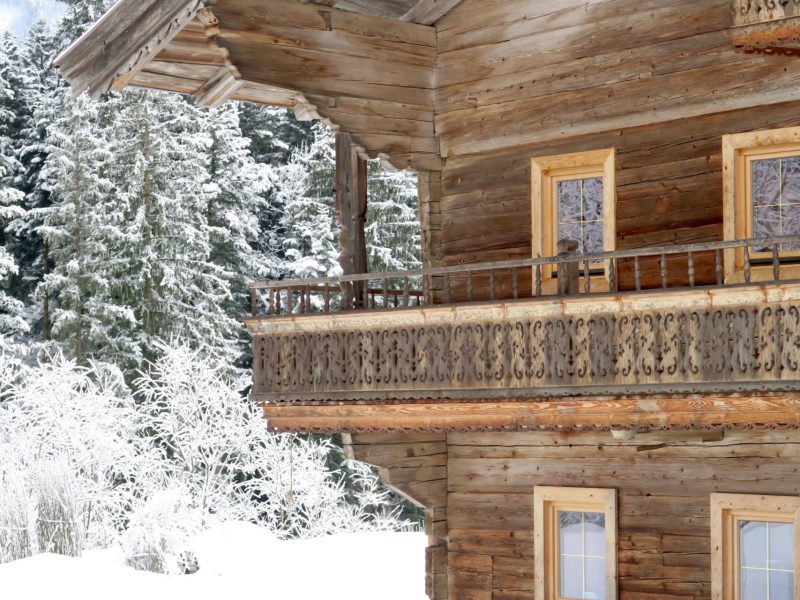
There is a reason this season is particularly revealing when looking at Alpine homes.
Summer is forgiving.
Doors stay open. Terraces enlarge the living space. Gardens soften awkward relationships between house and terrain. Long daylight makes almost every orientation usable.
Winter is decisive in another way: snow, heating, access and cold dominate.
Autumn sits between them and exposes the subtler questions.
How far does daylight penetrate into the main rooms?
Does the house receive afternoon sun or lose it behind the mountain?
Is the entrance convenient when weather changes?
Does the view remain interesting when the garden is no longer carrying the whole composition?
Can an ordinary day happen comfortably indoors?
The best mountain houses do not merely point towards a spectacular view.
They understand where they stand.
That means altitude, slope, orientation, shelter, access and the movement of light through the year.
Autumn is when those decisions become readable.
The scenery is still generous.
It has stopped doing all the work.
The In-Between Is the Point
It would be easy to end by claiming that autumn is the best season in Chamonix.
It isn’t necessary.
Winter allows the mountain to be lived in ways autumn cannot. Summer opens routes and high places that close again as conditions change. Spring has its own unstable negotiations between snow and warmth.
Autumn’s value is different.
It removes certainty.
You cannot assume that every lift will take you upwards. You cannot assume that every high path still belongs to summer. You cannot build every day around skiing.
The geography gets smaller.
A village.
A train.
A forest.
Lunch.
A walk.
Perhaps a mountain site if the weather agrees.
Home before the temperature falls.
And within that smaller geography, more detail appears.
The differences between Chamonix and Vallorcine.
Between forest and high ridge.
Between a house that merely has a view and one that understands its orientation.
Between a resort designed to entertain people and a valley capable of holding an ordinary week.
Perhaps that is what the weeks between summer and snow reveal best.
They ask a little less of the mountain.
And allow us to notice more of the place beneath it.

A life in five places
Curated co-ownership of characterful homes across Europe.
STAY CLOSE
The first collections are taking shape. Discover the homes, ownership model and what it means to become a member.
For enquiries: hello@lioravision.com
© 2026 Liora Vision · Legal Notice · Privacy Policy · Terms · Cookies
